


GEOHERITAGE - Revitalizing peripheral areas through the promotion of the Geotourism as alternative and sustainable form of tourism (ITHR0600822)
GEOHERITAGE - Revitalizing peripheral areas through the promotion of Geotourism as an alternative and sustainable form of tourism
Interreg Italy–Croatia 2021–2027
Project title: GEOHERITAGE – Revitalizing peripheral areas through the promotion of geotourism as an alternative and sustainable form of tourism
Lead partner: Alta Murgia National Park (Italy)
Project partners: Maiella National Park (Italy), Public Institution Biokovo Nature Park (Croatia), Vis Archipelago UNESCO Global Geopark (Croatia)
Associated partner: Imotski Lakes Geopark, associated with the Public Institution Biokovo Nature Park, within the Biokovo–Imotski Lakes UNESCO Global Geopark
Brief project description and objectives:
UNESCO Global Geoparks represent areas of exceptional geological, natural and cultural heritage with great potential for the development of sustainable tourism and local economies. However, many geoparks are located in geographically isolated and peripheral areas that face challenges such as tourism seasonality, limited visibility, underdeveloped interpretive content and insufficient connections between local communities and tourism stakeholders.
The GEOHERITAGE project is an international project under the Interreg Italy–Croatia Programme that brings together four UNESCO Global Geoparks: Alta Murgia and Maiella in Italy, and Biokovo–Imotski Lakes and the Vis Archipelago in Croatia. The project focuses on developing innovative and sustainable forms of geotourism by connecting geological heritage, local identity, education, digital technologies and the active participation of local communities.
Through a joint cross-border approach, project partners will develop a methodology for designing sustainable geotourism experiences and test it by implementing four pilot activities in the participating geoparks. The experience gained and the results achieved will be consolidated into a joint sustainable geotourism model (GEOHERITAGE Sustainable Geotourism Experience Model), which will enable the transfer of the developed solutions and their application in other geoparks and protected areas.
Special emphasis is placed on modern approaches to interpreting geological heritage, the application of digital and interactive technologies, the involvement of young people and the development of tourism experiences that contribute to extending the tourist season and the sustainable development of local communities. The project includes joint promotional and educational activities, the GeoCampus programme, campaigns to showcase local heritage and international exchanges of knowledge and experience.
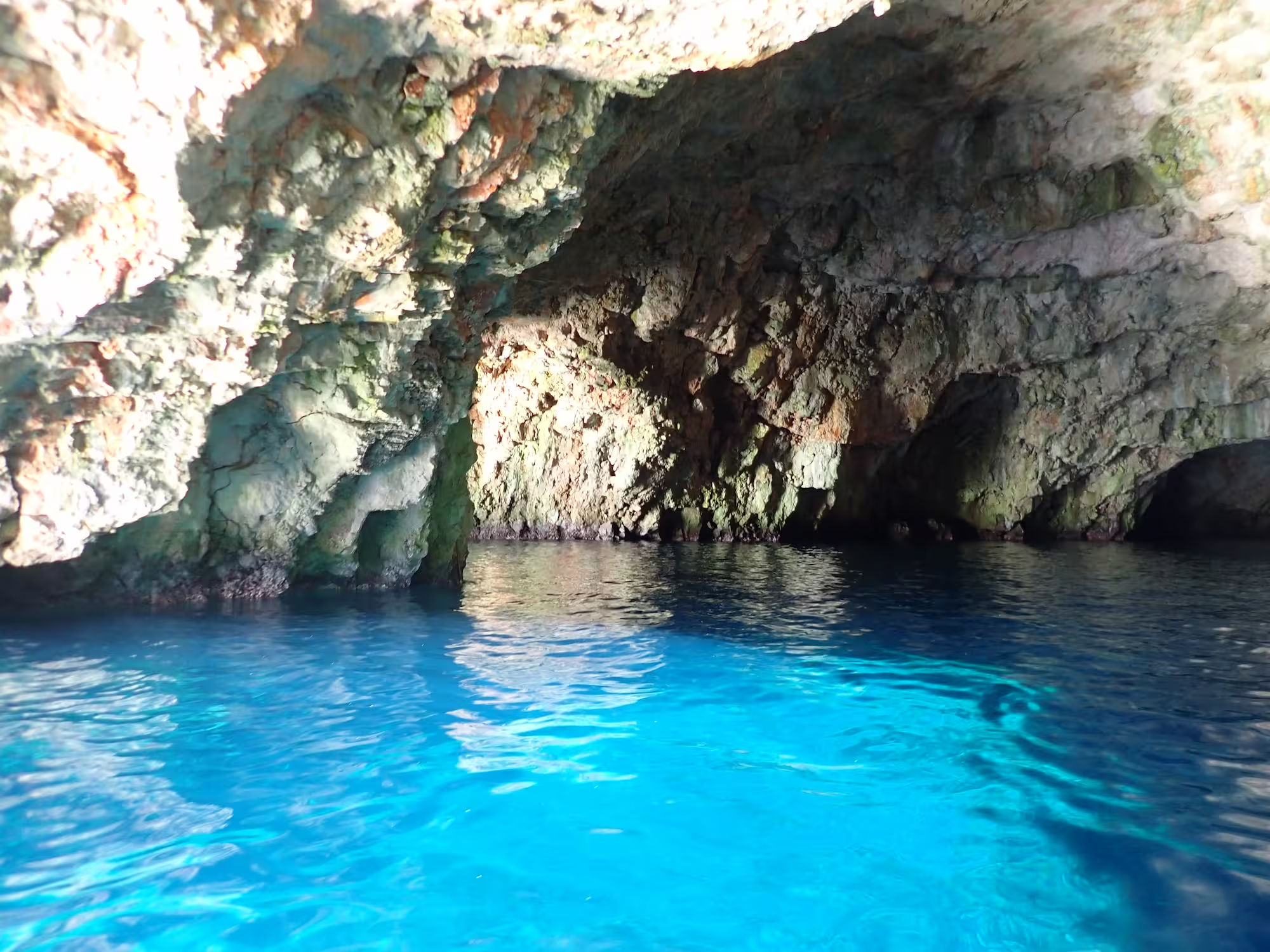
As part of the project, the Vis Archipelago Geopark is implementing the pilot activity "Blue Geopark Marine and Coastal GeoTrail – Accessible and Interactive Geoheritage Experience in the Vis Archipelago", aimed at developing a marine geotrail that will connect at least three significant marine geosites: the Blue Cave, the Green Cave and the Monk Seal Cave (Medvidina Cave).
This pilot activity will develop scientifically based interpretive content, including 360° and VR visualisations of marine geosites, which will be available online and at the Geopark Visitor Centre. The project also plans to create interactive geological models illustrating the geological structure of the Vis diapir, the appearance of the Vis Archipelago during the Last Glacial Maximum and landscape changes caused by subsequent sea-level rise. This will allow visitors to gain a better understanding of the geological evolution of the archipelago, including sites that are not equally accessible to all visitor groups.
The Vis Archipelago Geopark also leads Work Package 3 (WP3), coordinating the joint development, evaluation and finalisation of the sustainable geotourism model, as well as activities for the transfer and promotion of project results. It also participates in international promotional, educational and communication activities, including the "MY GEOPARKS" campaign, educational exhibitions, the GeoCampus programme and cooperation with other UNESCO Global Geoparks.
The general objective of the project is to strengthen the capacity of the participating geoparks to develop and promote sustainable geotourism through the joint design, testing and evaluation of innovative tourism experiences based on geological heritage, local identity, education, environmental protection and the participation of local stakeholders.
Project activities:
- Promotion of geoparks and youth engagement: Implementation of joint cross-border communication, promotional and educational activities, including the "MY GEOPARKS" campaign, educational exhibitions and the GeoCampus programme.
- Pilot activities for innovation in geopark tourism: Development of a common methodological framework and the implementation and evaluation of four pilot activities focused on developing innovative and sustainable geotourism experiences, including the marine and coastal geotrail of the Vis Archipelago.
- Development of a common model and transfer of results: Development, testing and evaluation of the common GEOHERITAGE sustainable geotourism model, along with its presentation and transfer to other geoparks, institutions and tourism stakeholders.
Expected results:
- Development of a common methodological framework for implementing innovative geotourism pilot activities.
- Implementation of four pilot activities in the participating UNESCO Global Geoparks.
- Development and evaluation of a common sustainable geotourism model (GEOHERITAGE Sustainable Geotourism Experience Model), applicable to other geoparks and protected areas.
- Development of the Vis Archipelago marine geotrail with digital and interactive interpretive content, including 360° and VR visualisations and geological models.
- Increased visibility of the geological heritage of the participating geoparks through joint promotional, educational and communication activities.
- Increased knowledge and participation of young people, local communities and tourism stakeholders in the development of sustainable geotourism.
- Strengthened cross-border cooperation between UNESCO Global Geoparks and facilitated application and transfer of the developed solutions to other areas.
Total project value: EUR 868,750.00
Total budget for the Vis Archipelago Geopark: EUR 206,250.00
Implementation period: 1 October 2026 – 31 March 2029
Contact person at the Vis Archipelago Geopark: Lana Schmidt, mag. ing. agr. – lana.schmidt@geopark-vis.com
This publication reflects the author's views; the Programme authorities are not liable for any use that may be made of the information contained therein

Aktualne vijesti vezane uz projekt

Hrvatskih mučenika 17
21485 Komiža, Croatia
VAT: HR11385762128
geopark@geopark-vis.com
Fotografije: Ivo Pervan, Matko Petrić, Stjepan Mekinić
Design & development: P3R0