


Blue Skills for a Sustainable Future – Service Learning in Support of the Blue Economy (2SD-DKU)
Second Swiss Contribution - Swiss-Croatian Cooperation Programme
Programme: Civil Society
Call: Strengthening the Contribution of Civil Society Organisations to Service-Learning
Project title: Blue Skills for a Sustainable Future – Service Learning in Support of the Blue Economy (2SD-DKU)
Lead organisation: Zdravi grad Association (Croatia)
Project partners: University of Split – Faculty of Maritime Studies (Croatia), Vis Archipelago Geopark (Croatia), Swiss Federal Research Institute WSL (Switzerland)
Brief project description and objectives:
The sustainable management of marine and coastal resources requires a combination of scientific research, higher education and the active participation of local communities. Climate change, marine pollution and pressures on marine ecosystems pose increasing challenges for island and coastal communities, making it essential to develop practical skills and innovative approaches to addressing them.
The project "Blue Skills for a Sustainable Future – Service Learning in Support of the Blue Economy" is implemented under the Swiss-Croatian Cooperation Programme through the Second Swiss Contribution, with the aim of strengthening cooperation between civil society organisations, the academic community and local stakeholders.
The project focuses on the development and implementation of service-learning (SL) programmes, an educational approach that connects academic knowledge with practical activities aimed at solving real-world problems and addressing the needs of local communities. Through this model, students apply their acquired knowledge in real-life situations while developing professional, social and civic competencies.
The project will develop and implement two service-learning programmes integrated into courses at the Faculty of Maritime Studies in Split: "Remote Sensing for Sustainable Development in Maritime Affairs" and "Ecology and Protection of the Marine Environment".
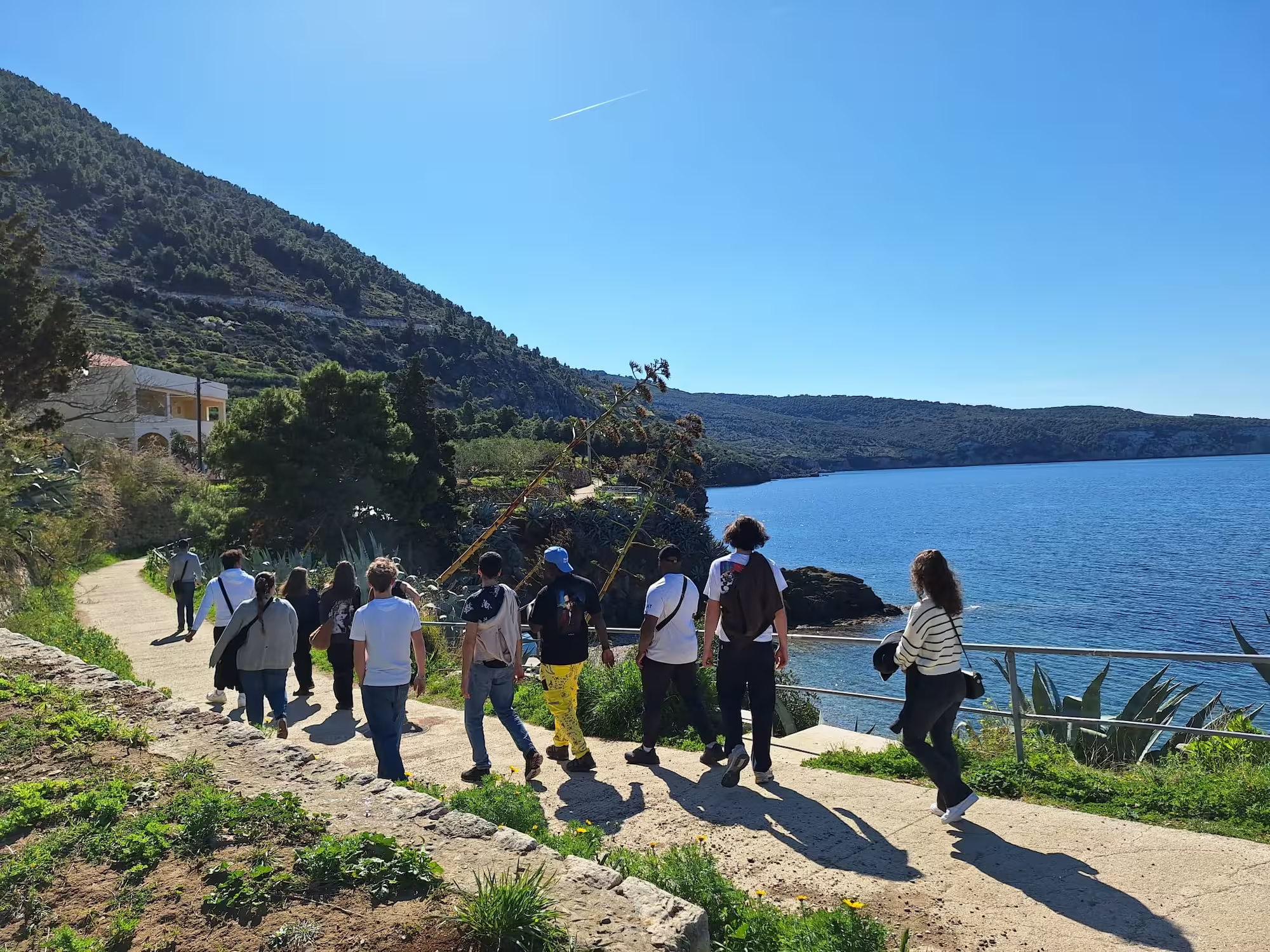
Special emphasis is placed on fieldwork on the islands of Vis and Hvar, where students, supported by academic staff and mentors from civil society organisations, will participate in environmental research, the application of remote sensing methods, educational activities and the development of solutions related to the sustainable use of marine and coastal resources. The project also includes STEM workshops for pupils in local schools and the development of itineraries in cooperation with local tourist boards.
As a project partner, the Vis Archipelago Geopark participates in the organisation and implementation of field activities, student mentoring, connecting the academic community with local stakeholders and carrying out educational and volunteering activities. By participating in the project, the Geopark contributes to the development of practical knowledge and skills related to the protection of natural heritage, the preservation of the marine environment and the sustainable development of island communities.
The general objective of the project is to strengthen the contribution and mentoring capacities of civil society organisations in implementing service-learning through the development and delivery of innovative educational programmes at the Faculty of Maritime Studies in Split, enabling students to acquire and apply blue skills in practice to address environmental and social challenges in local communities.
Expected results:
- Two service-learning programmes developed and implemented within the curriculum of the Faculty of Maritime Studies in Split.
- At least 40 students involved in service-learning programmes.
- Seven employees or volunteers from civil society organisations trained to implement service-learning programmes.
- Enhanced competencies of four academic staff members to integrate service-learning into their teaching.
- Two field research activities conducted on the islands of Vis and Hvar.
- At least four STEM workshops held in local schools.
- Strengthened cooperation between the academic community, civil society organisations and local stakeholders in the field of the sustainable blue economy.
Total project value: EUR 290,542.67
Funding awarded through the Swiss-Croatian Cooperation Programme: EUR 261,488.40
Implementation period: 1 September 2026 – 31 December 2028 (28 months)
Project Manager at the Vis Archipelago Geopark: Lana Schmidt, mag. ing. agr.
The project is co-financed by the Swiss Confederation as a contribution to reducing economic and social inequalities in the EU. The project is co-financed by the Office for Cooperation with NGOs of the Government of the Republic of Croatia.
The views expressed in this document are the sole responsibility of the Vis Archipelago Geopark and do not necessarily reflect the views of the Swiss Confederation or the Office for Cooperation with NGOs of the Government of the Republic of Croatia.
Aktualne vijesti vezane uz projekt
Representatives of the Vis Archipelago Geopark Participated in Training on Service-Learning
više
Hrvatskih mučenika 17
21485 Komiža, Croatia
+385 91 271 30 23
geopark@geopark-vis.com
Fotografije: Ivo Pervan, Matko Petrić, Stjepan Mekinić
Design & development: P3R0