


International expert visit to the Vis Archipelago UNESCO Global Geopark
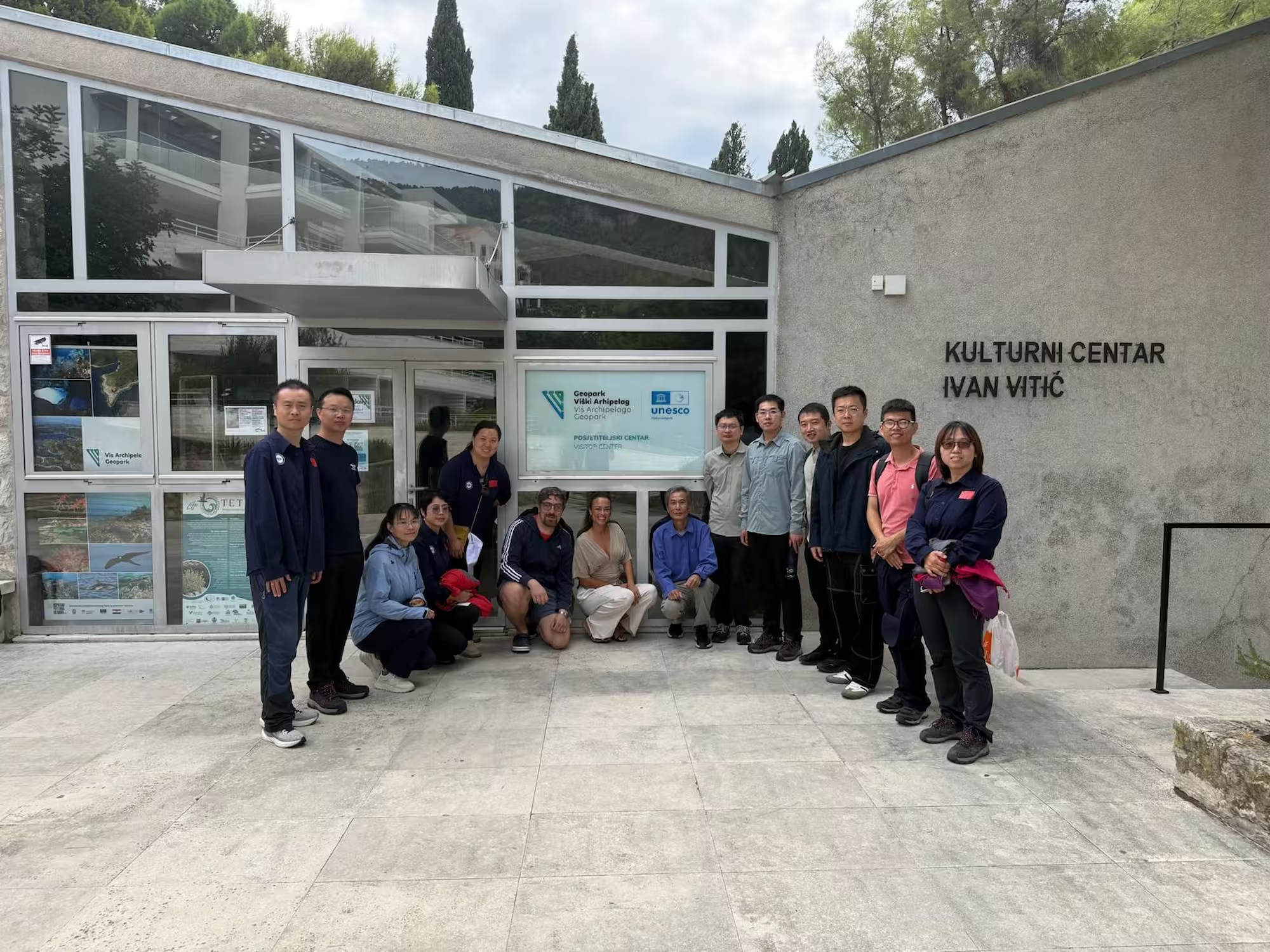
We hosted 12 PhDs in geology from China at the Vis Archipelago UNESCO Global Geopark Visitor Center in Komiža, who visited the Geopark accompanied by Ivo Andrić from the Faculty of Civil Engineering, Architecture and Geodesy at the University of Split.
The visit was an opportunity to present the geological features of the Vis Archipelago in greater detail, as well as the Geopark's work in conservation, research, education, and sustainable development for the local community.
The program began with a tour of the Visitor Center and the geological collection, which introduced our guests to the area's exceptional geological diversity. The Vis Archipelago is characterized by some of the oldest rocks on the Croatian Adriatic coast, dating back about 220 million years, as well as the unique magmatic rocks of Jabuka and Brusnik. We specifically highlighted the role of the salt diapir in shaping the island of Vis and the surrounding area, along with the processes that have influenced the landscape's current appearance over millions of years.
We also discussed the Geopark's most famous geological sites – Jabuka and Brusnik, the Blue, Medvidina, and Green caves, Stiniva Cove, and the Stupišće cape area, which was declared the first strictly protected marine area in Split-Dalmatia County in May 2025. Today, the Geopark includes 73 recorded geological sites and over 100 speleological features, alongside a range of legally protected geological, geomorphological, and landscape sites.
A special part of the presentation was dedicated to karst and groundwater. Most of Vis is built from highly permeable carbonate rocks, which causes rainwater to quickly sink through fissures and karst channels, with the majority of water circulation occurring underground. Since the island of Vis is not connected to the mainland water supply system, its local sources of drinking water and an understanding of hydrogeological processes are of vital importance to life on the island.
Following the geological overview, we presented the Geopark's main activities. These include the protection and interpretation of geological, natural, and cultural heritage, collaboration with scientific institutions on research into geology, karst, groundwater, and marine habitats, as well as various educational activities for children, students, visitors, and experts.
We also showcased specific projects that connect scientific research with local needs. Among these is the project for the research, protection, and sustainable use of groundwater on Biševo, which resulted in the creation of the first hydrogeological map of the island, the identification of areas with groundwater potential, and the confirmation of a sustainable freshwater karst aquifer.
We also presented the KRAS project, which focuses on monitoring water quality in various karst systems, seasonal changes, and potential anthropogenic impacts, as well as the "Dinosaur Footsteps" project, where students worked with experts to explore geological features on Vis, Jabuka, and Brusnik, studying rocks, minerals, fossils, and geological processes such as sedimentation, volcanism, rifting, and salt diapirism.
In addition to research and conservation, a significant part of the Geopark's work is focused on sustainable development and actively involving the local community. Through geotrails, local gastronomy, sports and educational events, sustainable tourism projects, cleanup campaigns, public lectures, and long-term cooperation with schools, we strive to bring geological heritage closer to the people who live, work, and stay in this area.
International expert visits like this one are an important part of exchanging knowledge and experience within the scientific community and an opportunity to present the geological heritage of the Vis Archipelago beyond local and national borders. At the same time, such meetings open doors for new contacts, collaborations, and diverse professional perspectives on an area that, due to its geological diversity, serves as a valuable natural laboratory for researching geological and karst processes.
We thank our guests for their visit, their interest, and a pleasant professional exchange.


Posljednje novosti

Hrvatskih mučenika 17
21485 Komiža, Croatia
+385 91 271 30 23
geopark@geopark-vis.com
Fotografije: Ivo Pervan, Matko Petrić, Stjepan Mekinić
Design & development: P3R0