


World Environment Day: How does an offshore island surrounded by sea have drinking water?
On World Environment Day, we often talk about the sea, waste, biodiversity, and climate change. But on an island like Vis, one of the most important environmental issues lies beneath the surface – in the rock, fissures, and karst underground that safeguard the island's most valuable resource: drinking water.
Vis is an offshore island, far from the mainland and surrounded by sea on all sides. Yet, unlike many other islands, it is not connected to the mainland water supply. The water we use for life on the island comes from the island itself – from underground reserves created by rainfall and Vis's unique geological conditions.
The answer to the question of how an island surrounded by sea has drinking water lies in its geology.
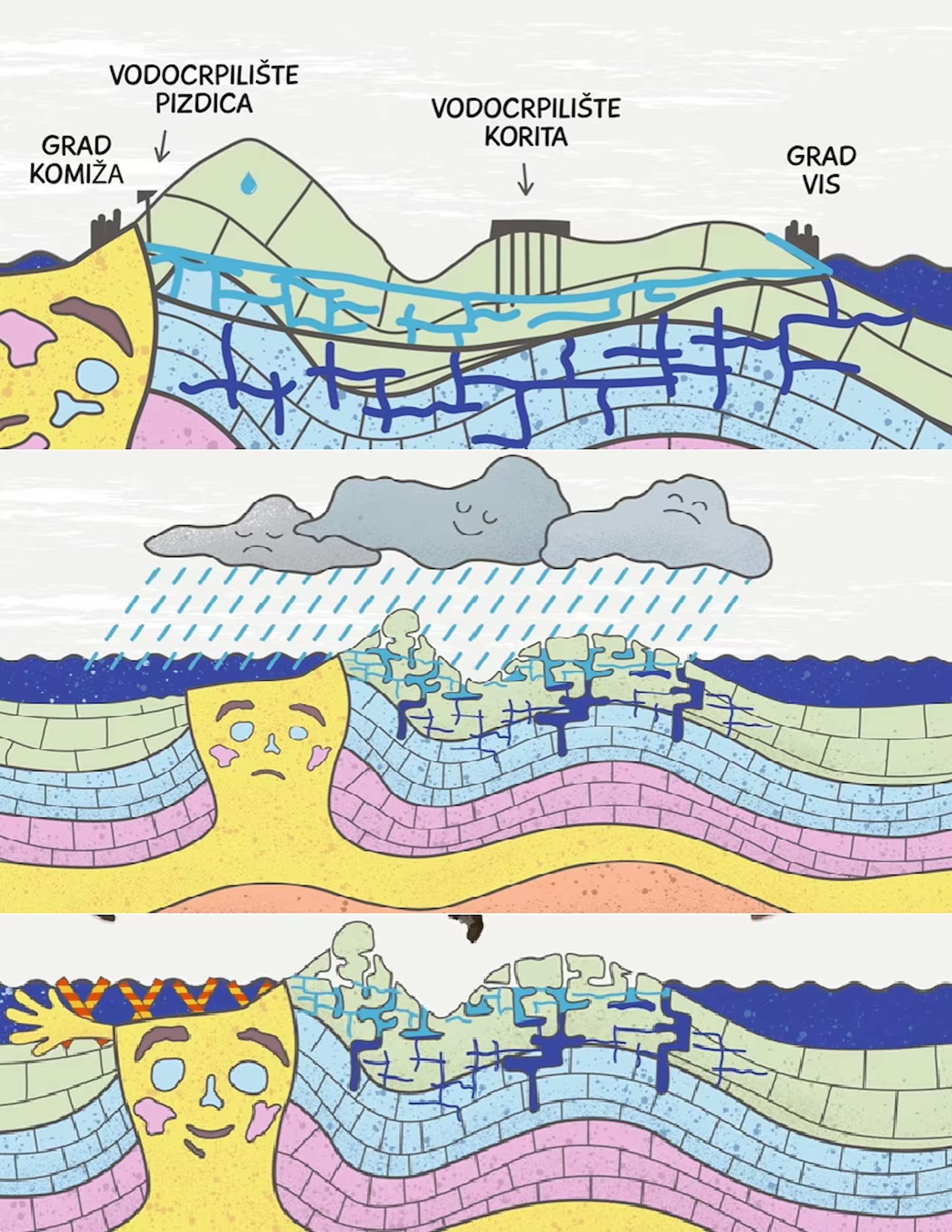
Most of Vis Island is composed of limestone rocks formed by sedimentation in ancient shallow seas. Such rocks are typical of karst terrain: water does not remain on their surface for long, but quickly sinks into the island's interior through fissures, cavities, and underground channels. That's why Vis has no permanent rivers or major surface flows. Instead of flowing across the surface, water moves through the underground.
The Komiža area and the Komiža salt diapir play a special role in this story – one of the most important geological features of the Vis archipelago. It is a structure formed by the uplift of a large mass of ancient evaporite rocks from deep within the Earth's crust. These rocks are approximately 220 million years old and bear witness to a time when the area of today's Adriatic looked completely different.
Throughout geological history, the uplift of the salt diapir deformed the surrounding carbonate rocks and shaped complex relationships between different rock types. These relationships are crucial for understanding water on Vis. Permeable limestones allow rainwater to seep into the underground, while less permeable rocks can act as natural barriers that direct and retain water.
In the Komiža area, contacts between different rocks can be observed – limestones, volcanic tuffs, and andesitic lavas. Such geological contacts are not just interesting traces of the distant past, but also hold very concrete importance for life on the island: it is precisely because of these underground relationships that Vis has its own drinking water reserves.
In other words, water on Vis is no coincidence. It is the result of a long geological process: sedimentation of rocks in ancient seas, volcanic activity, the uplift of the salt diapir, tectonic shifts, erosion, and karst formation of the underground. What we experience today as an everyday resource – tap water – is actually part of a much larger story of an island shaped over millions of years.
The main source of drinking water on Vis is Korita, where groundwater is extracted from the island's karst system. Since Vis is not connected to the mainland water supply, the amount of available water directly depends on the rain that falls on the island itself. Every drought, every long period without precipitation, and every increase in summer consumption therefore strongly impact the island's water system.
That is precisely why water protection on Vis is not just a technical or municipal issue. It is a question of our relationship with the environment, the land, and the way of life on the island.
Karst groundwater is very sensitive. It is unseen, but directly connected to what we do on the surface. Soil pollution, irresponsible waste disposal, excessive consumption, unregulated discharges, and the pressure from a large number of visitors during the summer months can all affect a system that regenerates slowly and depends on the natural rhythm of precipitation.
That's why World Environment Day is an opportunity to remember that nature protection doesn't just mean preserving the landscapes we see – the sea, beaches, caves, dry stone walls, and coves. On Vis, environmental protection extends deep into the rock, into the underground space that safeguards the island's water, life, and future.
Drinking water on Vis is a story of geology, but also of responsibility. It depends on the rain, on the rock, on the underground – but also on all of us.
Learn more about the water and geology of Vis in the video:


Posljednje novosti

Hrvatskih mučenika 17
21485 Komiža, Croatia
+385 91 271 30 23
geopark@geopark-vis.com
Fotografije: Ivo Pervan, Matko Petrić, Stjepan Mekinić
Design & development: P3R0