


Expert workshop on water supply for the island of Vis held in Komiža as part of the Sea2Summit project
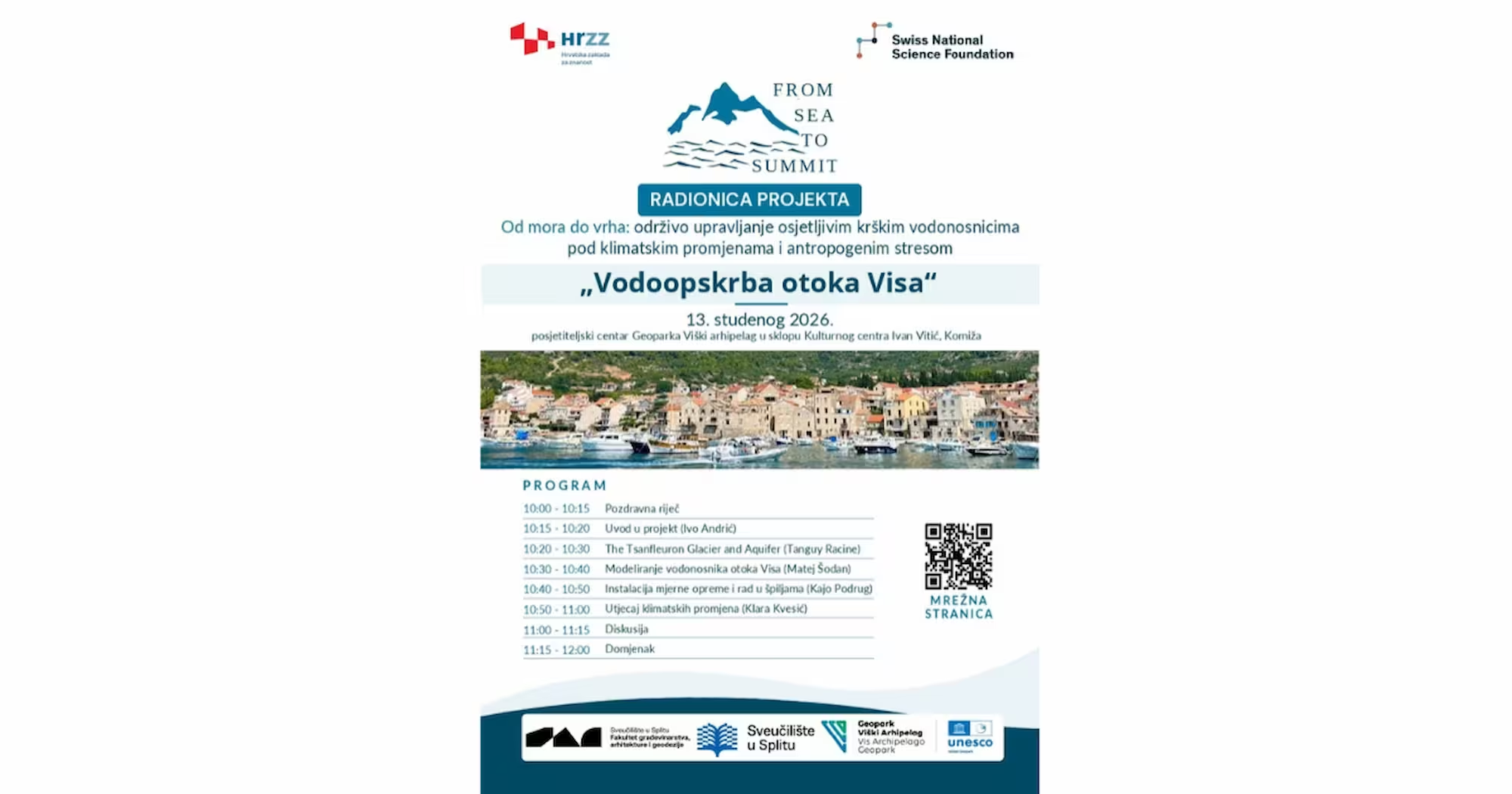
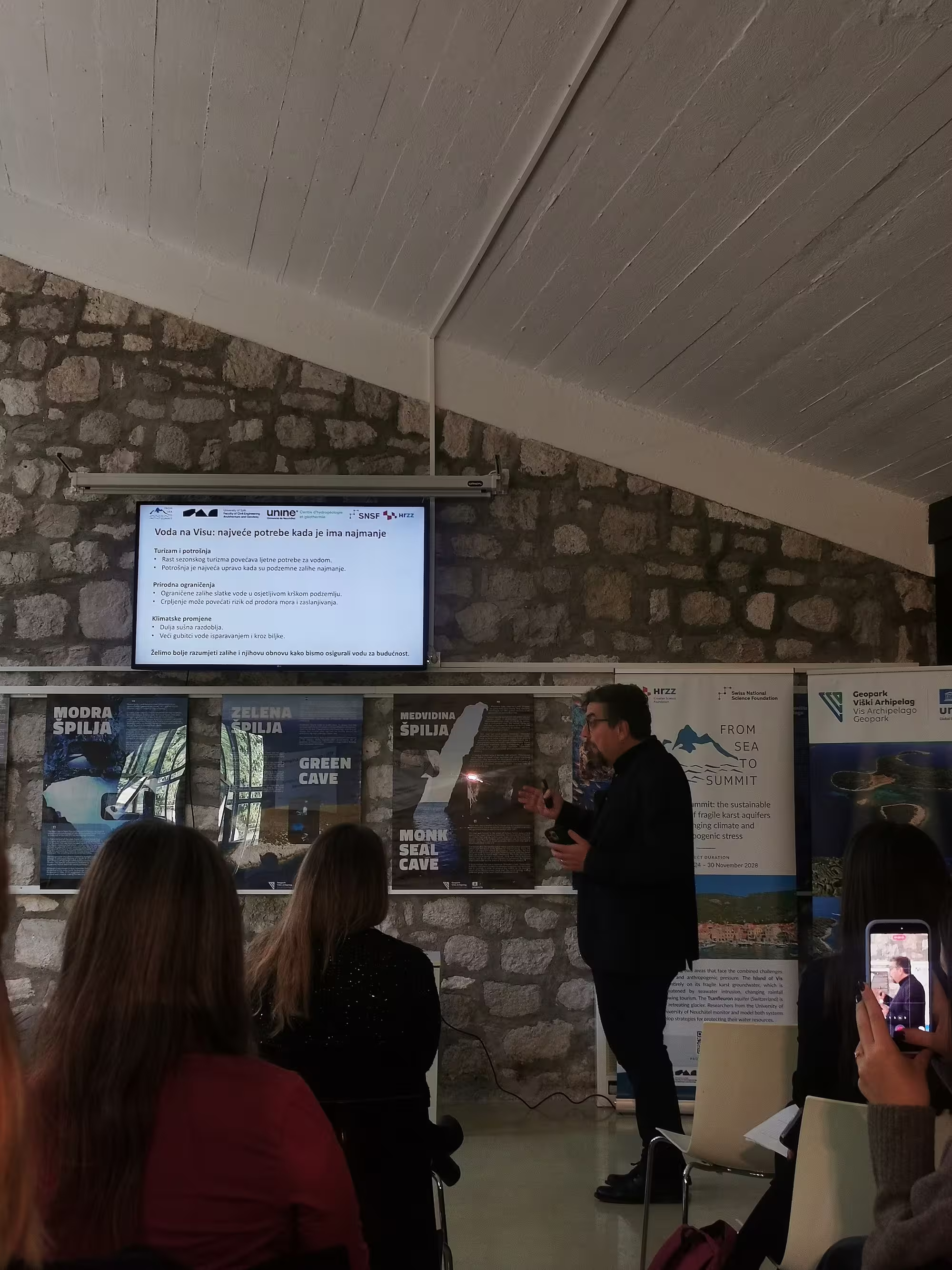
A professional workshop was held today at the Vis Archipelago Geopark Visitor Center, located within the Ivan Vitić Cultural Center in Komiža. "Water Supply of the Island of Vis", organized by the research team of the project Sea2Summit – "From Sea to Summit: Sustainable Management of Sensitive Karst Aquifers under Climate Change and Anthropogenic Stress".
The project is being conducted through a scientific collaboration between the Faculty of Civil Engineering, Architecture and Geodesy at the University of Split and the University of Neuchâtel in Switzerland, with financial support from the Croatian Science Foundation and the Swiss National Science Foundation.
The workshop brought together participants interested in water supply issues, hydrogeological research, and the long-term management of water resources on the island of Vis. The project's objectives, research activities to date, and plans for future research were presented, with a special emphasis on understanding the functioning of the island's karst aquifer and its sensitivity to climate change.
Water supply on the island of Vis under climate change conditions
The island of Vis is one of the few Croatian islands that secures its water supply from its own underground sources, without being connected to the mainland water supply system. Such independence is a significant advantage, but it simultaneously requires responsible and long-term planning for the use of available water resources.
Karst aquifers are complex natural systems in which water moves through cracks, cavities, and channels within rocks. Their functioning depends on geological structure, the amount and distribution of precipitation, infiltration, and the method of groundwater extraction. In coastal and island areas, an additional challenge is the potential for seawater intrusion into the freshwater aquifer.
For Vis, it is particularly important that peak water consumption during the tourist season coincides with a period of high temperatures and reduced precipitation. Longer dry periods, changes in precipitation patterns, and increasing pressure on water resources further emphasize the need for systematic monitoring and a better understanding of the island's groundwater reserves.
These are precisely the issues addressed by the Sea2Summit project, which combines hydrogeological research, field measurements, and computer modeling to create a more robust scientific foundation for future water resource management.
From cave exploration to groundwater modeling
Several related research topics were presented during the workshop.
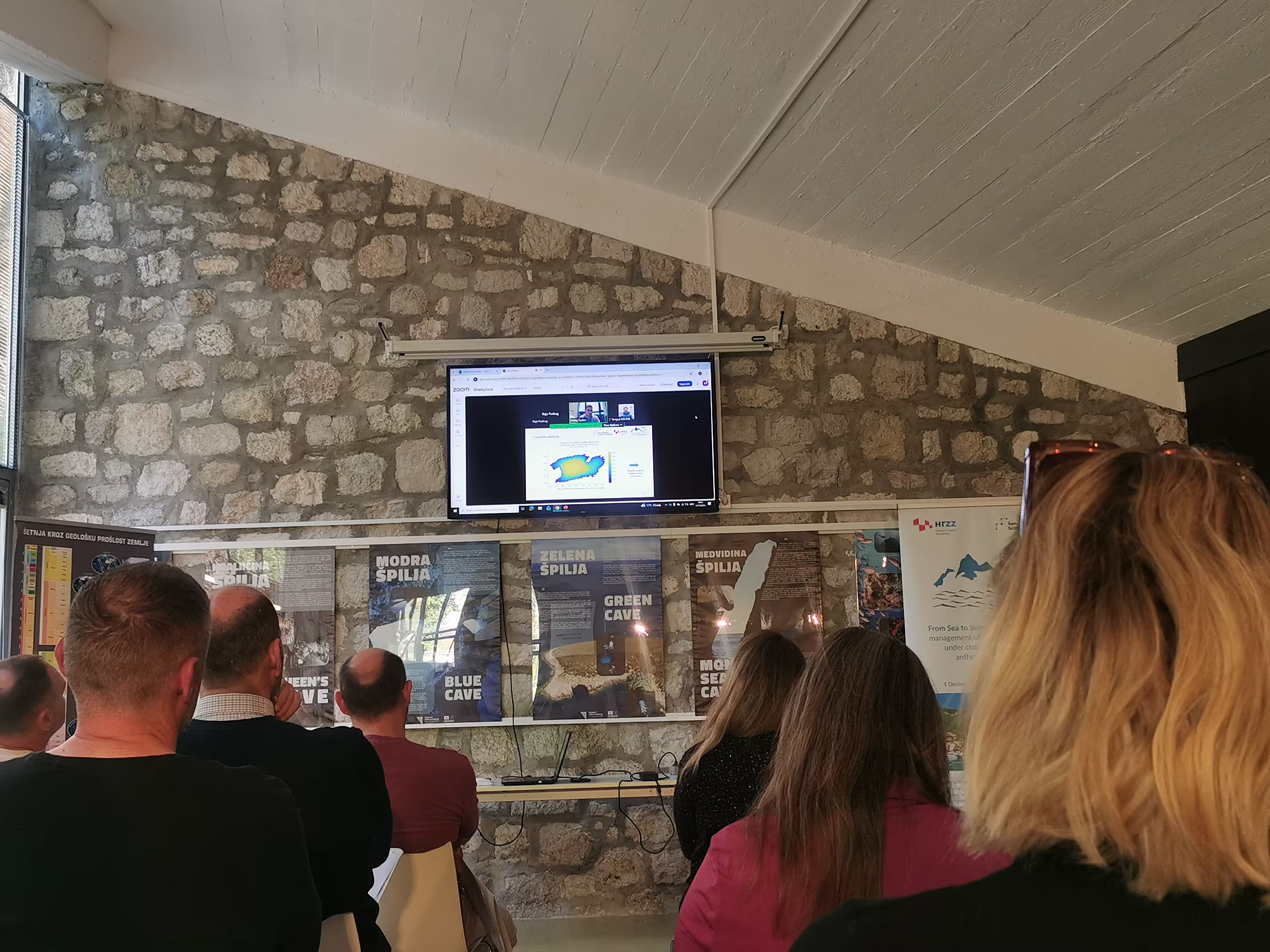
Ivo Andrić gave an introductory presentation of the project, while Tanguy Racine presented research on the Tsanfleuron glacier and karst aquifer in Switzerland. This is the project's second research area, which allows for the comparison of different karst systems exposed to climate change.
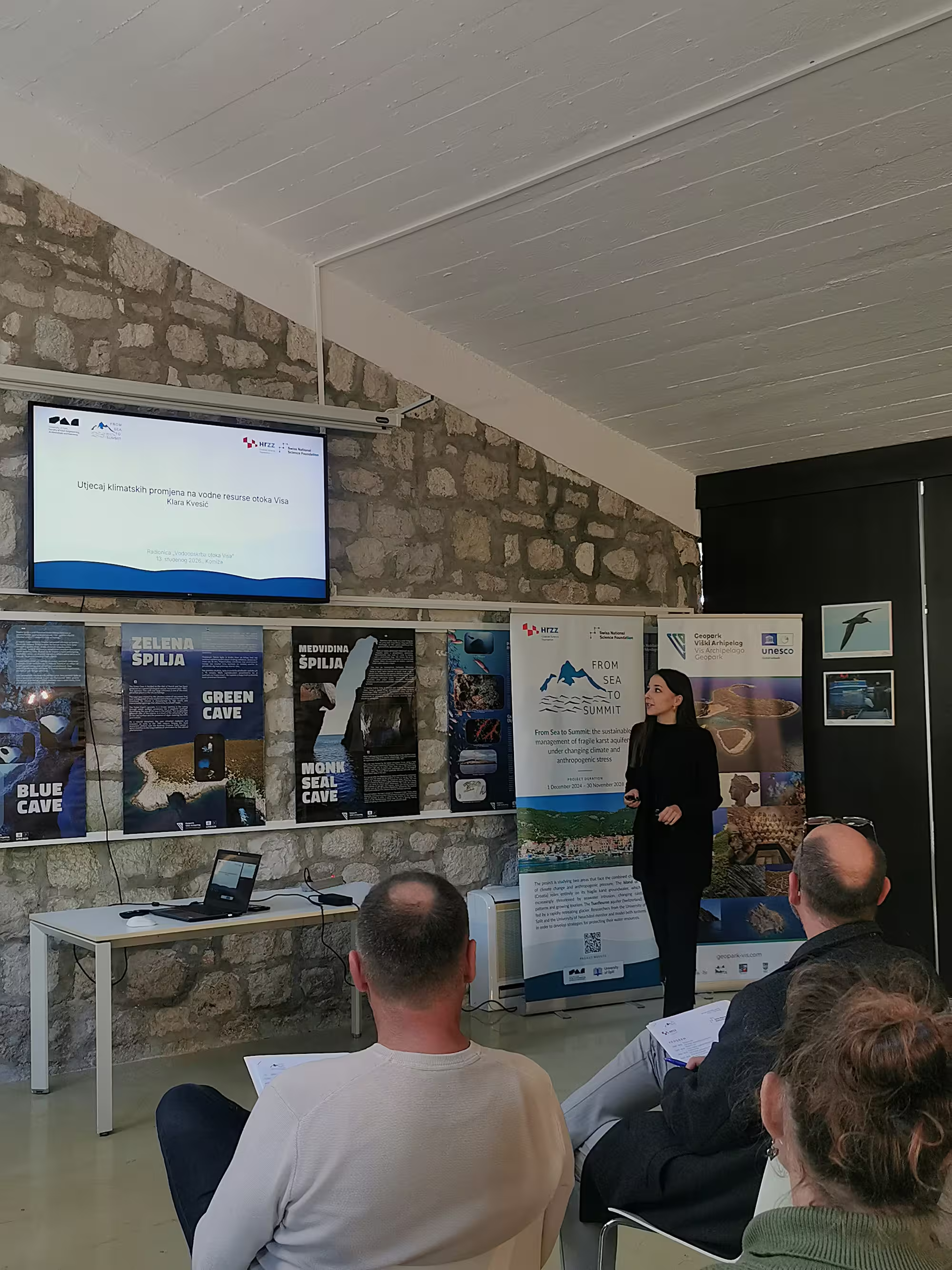
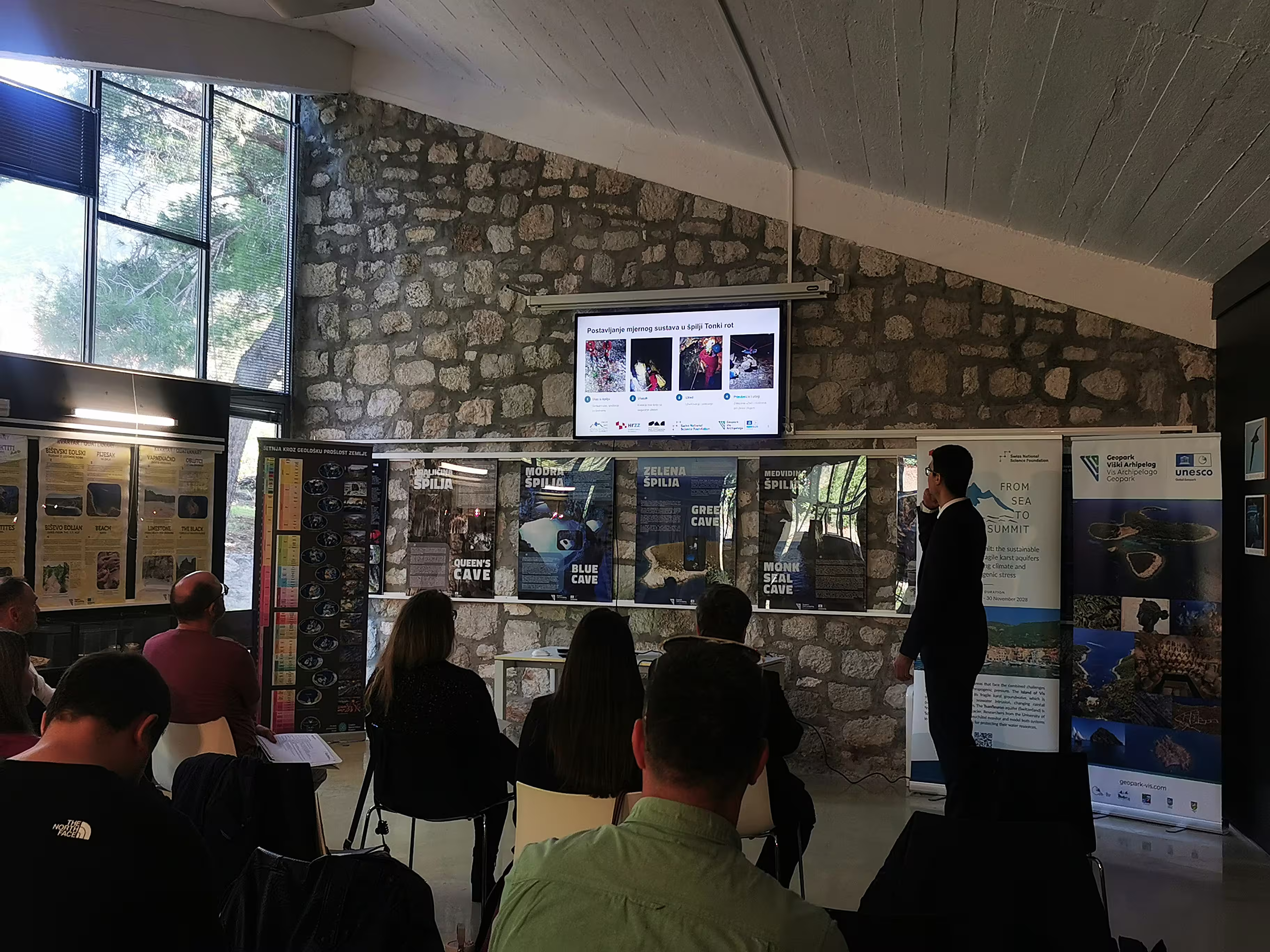
Matej Šodan presented the modeling of the Vis island aquifer, and Kajo Podrug discussed activities related to the installation of measuring equipment and research work in caves. Klara Kvesić spoke about the impact of climate change on water resources.
The special value of the project stems from the integration of different research methods. Field measurements allow for the collection of data on the actual behavior of the aquifer, while computer models serve to better understand the processes occurring underground and to assess potential changes under different climatic conditions.
Groundwater data for Vis available in near real-time
One of the important results of the project so far is the establishment of a continuous groundwater monitoring system in the area of the Korita pumping station.
In April 2026, the research team installed measuring equipment in the BO6 piezometer, enabling continuous monitoring of changes in the underground aquifer. An automatic weather station was also installed, providing data essential for understanding the relationship between weather conditions, precipitation, and the replenishment of underground water reserves.
Data collected through measurements is publicly available via the online platform VodiMe, which allows the interested public to monitor the groundwater of the island of Vis in near real-time.
Monitoring measurements: https://vodime-sensor.web.app/sensor/sea2summit
In addition to the measurements at Korita, the project team has been conducting groundwater sampling and research at the Pizdica spring, an important natural site for understanding the island's hydrogeological characteristics. The research also includes exploring the feasibility of long-term monitoring of water discharge at this spring.
The collected data contributes to understanding the relationship between fresh groundwater and the sea, changes in the aquifer, and its response to precipitation and extraction.
Scientific research as a foundation for preserving island resources
The Sea2Summit project is halfway through its implementation, and the activities carried out so far have laid the groundwork for continued monitoring and more detailed analysis of karst aquifers.
Research on the island of Vis and in the Tsanfleuron area of Switzerland enables the exchange of knowledge and the development of methods that can be useful to other regions facing challenges in freshwater resource conservation.
For the Vis Archipelago Geopark, whose activities are based on the protection of geological heritage, education, and sustainable development, such research is of particular value. Connecting the island's geological features with issues of water availability and protection contributes to a better understanding of the natural processes that directly affect the life of the local community.
We thank the research team for presenting the project and their work to date, and all participants for their involvement and discussion. We wish the Sea2Summit project and its research team much success in the second half of its implementation, the continuation of field research, and the development of new scientific insights important for sustainable water resource management.
More information about the project, research activities, and news is available on the official website:
https://from-sea-to-summit.github.io/


Posljednje novosti
Expert workshop on water supply for the island of Vis held in Komiža as part of the Sea2Summit project
višeThe island of Vis as a space for new ideas – exhibition by Faculty of Architecture students in Komiža
višeVis Archipelago Geopark successfully passes second UNESCO revalidation – green light for a new four-year period
više
Hrvatskih mučenika 17
21485 Komiža, Croatia
+385 91 271 30 23
geopark@geopark-vis.com
Fotografije: Ivo Pervan, Matko Petrić, Stjepan Mekinić
Design & development: P3R0