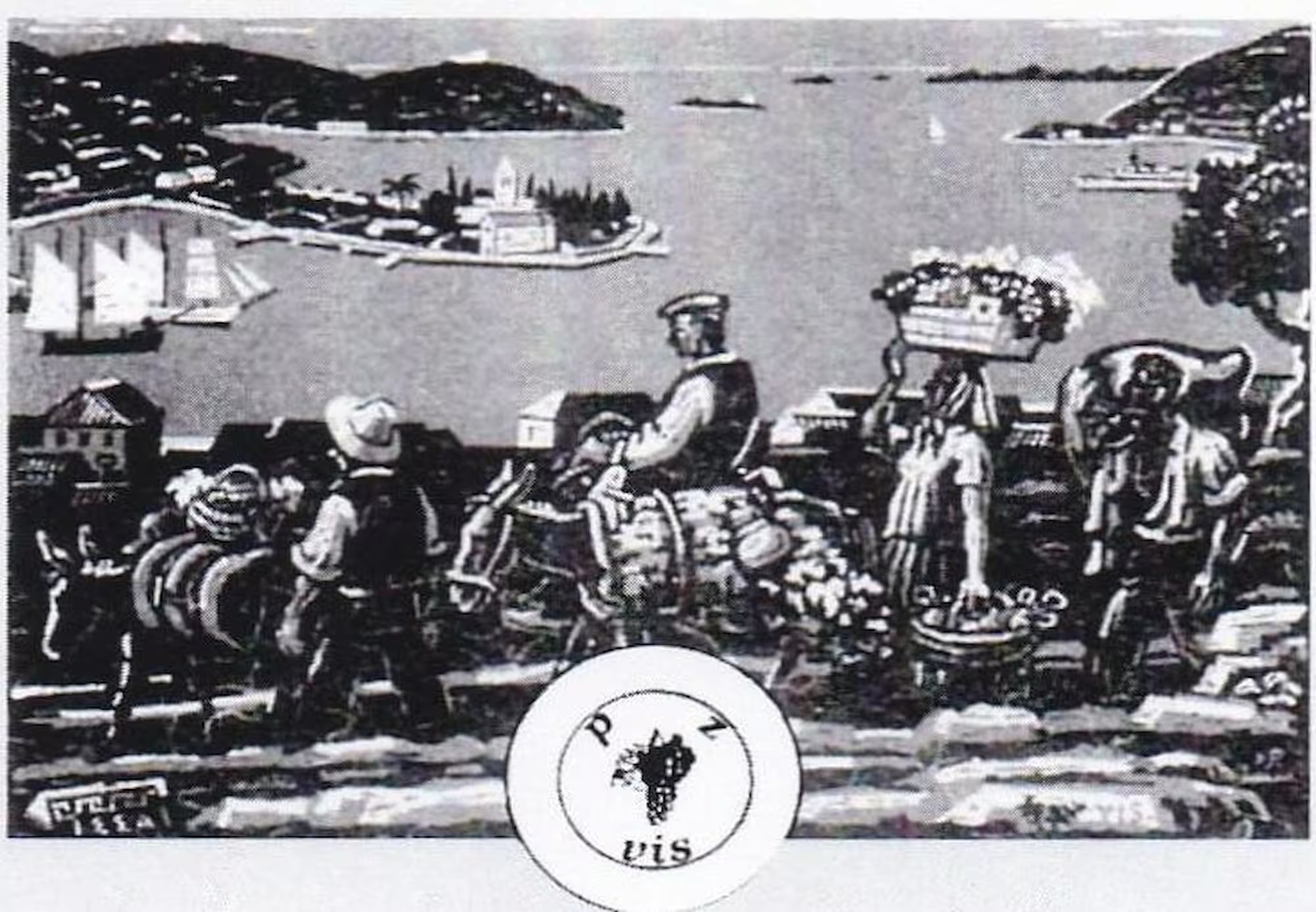
The Vis Agricultural Cooperative is one of the oldest and most recognized agricultural institutions on the island of Vis. It was founded in 1909 under the name "Težačka sloga" (Peasant's Unity), with the aim of strengthening cooperation among the local population, supporting Vis peasants, and improving the economic standing of its members.
From its very beginnings, the cooperative played an important role in the island's life. It supplied its members with necessary resources for household and agricultural farming and helped them market their products. At a time when individual producers could not easily achieve favorable sales conditions, cooperation was crucial for greater competitiveness, more stable income, and the preservation of island agriculture.
The cooperative's history is closely linked to the development of Vis viticulture. In the late 19th and early 20th centuries, Vis experienced a peak in demographic and economic development, primarily due to the successful marketing of Vis wines. During a period when phylloxera was destroying vineyards across Europe, Vis, thanks to the disease's later arrival on the island, temporarily maintained strong wine production and export. After wars, emigration, and a decrease in the agriculturally capable population, vineyard areas gradually diminished. During the 1970s, efforts were made to revitalize them by planting larger areas of grapevines, especially the Trbljan variety.
Today, P.Z. Vis continues the tradition of connecting local winemakers, island production, and authentic Vis flavors. It is located in the very center of Vis town, as the only winery in the town center. Its offerings include wines produced from indigenous and traditional varieties, notably Vugava, a traditional Vis white variety, Viško bijelo from Trbljan grapes, and Plavac mali.
.avif)
.avif)
.avif)
In addition to wines, a special place in their offering is held by brandies and liqueurs produced according to old recipes, exclusively from raw materials sourced on the island of Vis. Herbs, citrus fruits, and the fruits of the Vis landscape give them a distinctive Mediterranean character and connect production with the island's natural resources. The selection includes limoncello, liqueurs made from orange, tangerine, sage, pine, myrtle, almond, walnut, fig, jujube, and olive, as well as liqueurs with evocative names like Blue Cave, Green Cave, and Teuta – a liqueur made from arbutus, the fruit of the wild strawberry tree.
Visitors to the cooperative's wine shop can enjoy tastings of wines, brandies, and liqueurs, allowing them to discover the island's flavors and choose an authentic Vis product. Tastings are individualized, enabling each visitor to discover the product that best suits their taste. The wine shop is decorated in a traditional style and preserves objects used by previous generations, making a visit to the cooperative not just a tasting of local products, but also an encounter with a part of Vis's agricultural, family, and everyday heritage.
.avif)
.avif)
.avif)
As a partner of the Vis Archipelago Geopark, the Vis Agricultural Cooperative contributes to the preservation and promotion of island production, viticultural traditions, cooperativism, and local products. Its story connects the island's natural conditions, the labor of Vis peasants, the knowledge of local producers, and the flavors that have shaped Vis's identity for over a century.