


Natura 2000 Day - Natura 2000 in the Vis Archipelago: The Sea as an Area of Greatest Value
The Vis Archipelago is one of the most important areas for marine nature conservation in the Split-Dalmatia County. Although it is most often perceived through the recognizable landscapes of Vis, Biševo, Ravnik, Budikovac, Brusnik, Svetac, Palagruža, Galijula, and numerous smaller islets, reefs, and rocks, its greatest natural value in the European context is particularly linked to the sea, the underwater world, and the life hidden within it.
The Vis Archipelago area accounts for as much as 60% of the marine part of the Natura 2000 network in the Split-Dalmatia County, or nearly 600 km² of marine area important for nature conservation. At the same time, the terrestrial part of the Vis Archipelago makes up 5.6% of the terrestrial part of the county's Natura 2000 network. These data clearly show that the marine area of the Vis Archipelago is of exceptional importance for the conservation of European-valued habitats and species.
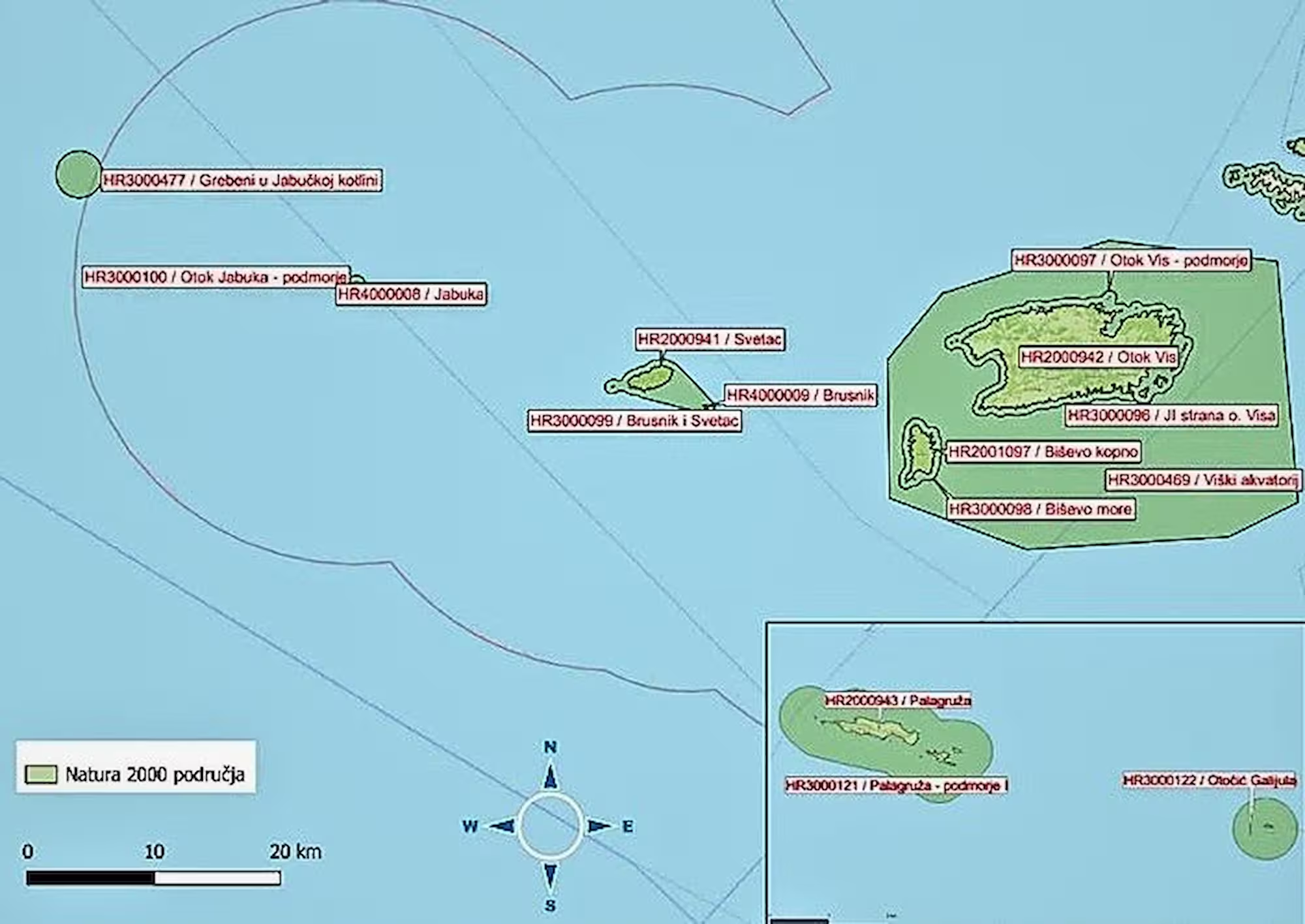
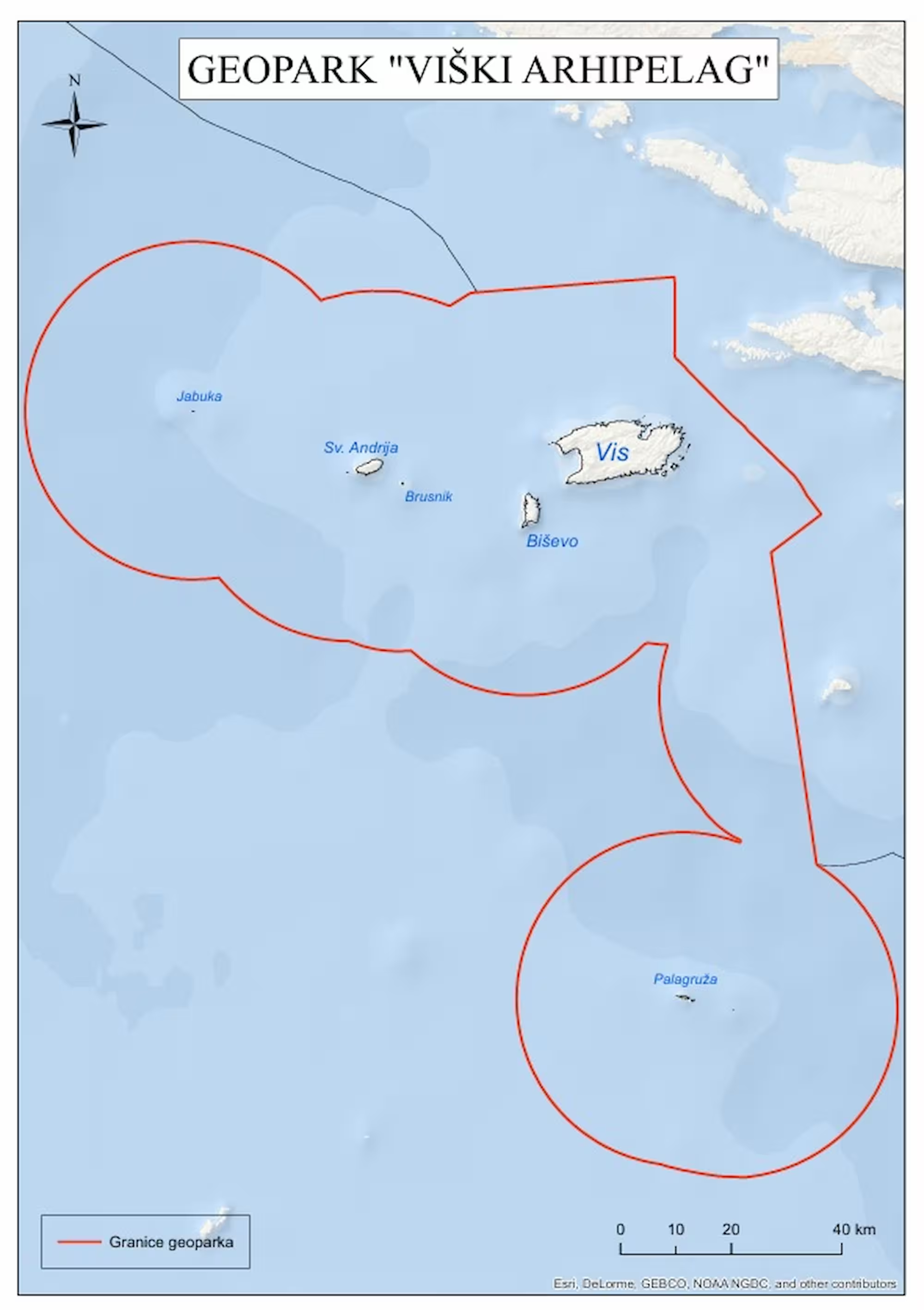
The Natura 2000 area within the Vis Archipelago encompasses the entire terrestrial part of the islands, islets, and rocks, as well as the underwater area up to 500 meters from the coast. This means that protection applies not only to the island of Vis but also to a wider island and marine area, including Biševo, Ravnik, Budikovac, Brusnik, Svetac, Palagruža, Galijula, and numerous smaller islets and reefs. It is precisely this diversity of terrestrial, coastal, and marine habitats that makes the Vis Archipelago a particularly valuable part of the European ecological network.
This area preserves various marine and coastal habitat types, among which particularly stand out sea caves, reefs, Posidonia beds, sandy bottoms, and an aquatic area important for bottlenose dolphins. In addition to the underwater world, Natura 2000 also includes habitats important for seabirds of offshore islands, which use remote and difficult-to-access parts of the archipelago for nesting, resting, or feeding.
A special place in the natural heritage of the Vis Archipelago is held by sea caves. In this area, there are recorded 38 sea caves as Natura 2000 habitat type 8330 – submerged or partially submerged sea caves. They are found not only around Vis and Biševo but also around Svetac, Brusnik, Palagruža, and Galijula. Sea caves are not just attractive landscape phenomena; they are sensitive underwater systems where specific conditions of light, temperature, sea currents, and life adapted to shade, twilight, or complete darkness prevail.
Among the most famous examples of such areas are certainly the caves around Biševo, but the overall value of the Vis Archipelago does not stem solely from individual well-known localities. Its value lies in its entirety: in the interconnectedness of the open sea, offshore islands, underwater reefs, sea caves, Posidonia meadows, and the habitats of numerous marine organisms. It is precisely this interconnectedness that makes the archipelago an important area for the long-term conservation of Adriatic biodiversity.
An important part of this area also includes Posidonia meadows, a marine flowering plant that plays an exceptional ecological role in the Mediterranean. Posidonia forms underwater meadows that serve as habitat, feeding grounds, and shelter for numerous marine species. It contributes to sea clarity, seabed stabilization, and the preservation of coastal ecosystems. Due to its slow growth and sensitivity to pressures, Posidonia meadows are considered one of the key indicators of marine environmental health.
The waters of the Vis Archipelago are also important for the common bottlenose dolphin, one of the most recognizable protected species in the Adriatic. Its presence reminds us that marine conservation means not only protecting individual sites but also preserving a wider living space: areas for movement, feeding, resting, and reproduction of marine organisms.
Special attention in the management of this area is given to sea caves as an extremely sensitive Natura 2000 habitat. Through the project ASPeH – Adriatic Species and Habitats of Coastal Areas , a public consultation process was conducted on the draft Conservation Plan for Natura 2000 habitat type 8330 – submerged or partially submerged sea caves in the Vis Archipelago area. As part of the consultation, five letters or emails were received, and feasible suggestions were taken into account when refining the Plan's text.
Special attention in this process was given to Medvidina Cave on Biševo, one of the most sensitive sites in the Vis Archipelago. During the refinement of the Plan, the possibility of reintroducing a floating barrier at the cave entrance, along with a surveillance camera and active monitoring by a local nature warden, was addressed to prevent illegal organized visits and reduce disturbance to this exceptionally valuable habitat.
Such an approach is also important due to the fact that Medvidina Cave represents an area potentially crucial for the possible return of the Mediterranean monk seal, one of the most endangered marine species in the Mediterranean. This example shows that the conservation of Natura 2000 areas means not only documenting natural values but also concretely planning protection measures, monitoring, and responsible spatial management.
Therefore, Natura 2000 in the Vis Archipelago is not just an administrative label on a map. It is confirmation that this is an area of exceptional natural value, but also a reminder that this value is fragile. Pressures such as intensive anchoring, marine pollution, irresponsible visits to sea caves, disturbance to animals, excessive use of coastal areas, and climate change can long-term affect the condition of habitats and species for which the area is included in the European ecological network.
The preservation of the Vis Archipelago is therefore not just a matter of nature protection, but also a question of a responsible relationship with an area that forms the foundation of local identity, tourism, fisheries, scientific research, and the life of island communities. The sea of the Vis Archipelago is not merely a backdrop to a beautiful landscape — it is a living system, part of European natural heritage, and one of the key areas for the conservation of marine biodiversity in Split-Dalmatia County.


Posljednje novosti

Hrvatskih mučenika 17
21485 Komiža, Croatia
+385 91 271 30 23
geopark@geopark-vis.com
Fotografije: Ivo Pervan, Matko Petrić, Stjepan Mekinić
Design & development: P3R0