


Summer at the Geopark 2026: from Earth's history and volcanoes to the sea and the living world of the Vis archipelago
During the summer of 2026, the Vis Archipelago Geopark participated in the Ljeto u Komiži, Mini ljeto u Komiži, and Viško ljetoprograms, through a continuous series of scientific and educational workshops for children and a cycle of lectures aimed at the general public.
A special part of this year's program was the Mini Science Day, which took place throughout July and August every Wednesday in Komiža. Over nine summer sessions, children explored a new topic each week related to the geology, paleontology, biology, and natural heritage of the Vis Archipelago.
The program for the youngest participants was also expanded to the town of Vis, where two additional workshops were held in August, two workshops, dedicated to volcanoes and the snakes of the Vis Archipelago.
In addition to the children's program, the summer also featured a total of seven popular science lectures in Komiža and Vis, through which we introduced the audience to some of the most important geological stories of our region – from the oldest rocks in the Adriatic and the geology of Biševo to drinking water on Vis, geological sites, and the geological development of the entire Vis Archipelago.
A new scientific story every Wednesday
The idea behind Mini Science Day was to allow children to be more than just listeners throughout the summer; it was designed to turn them into little explorers.
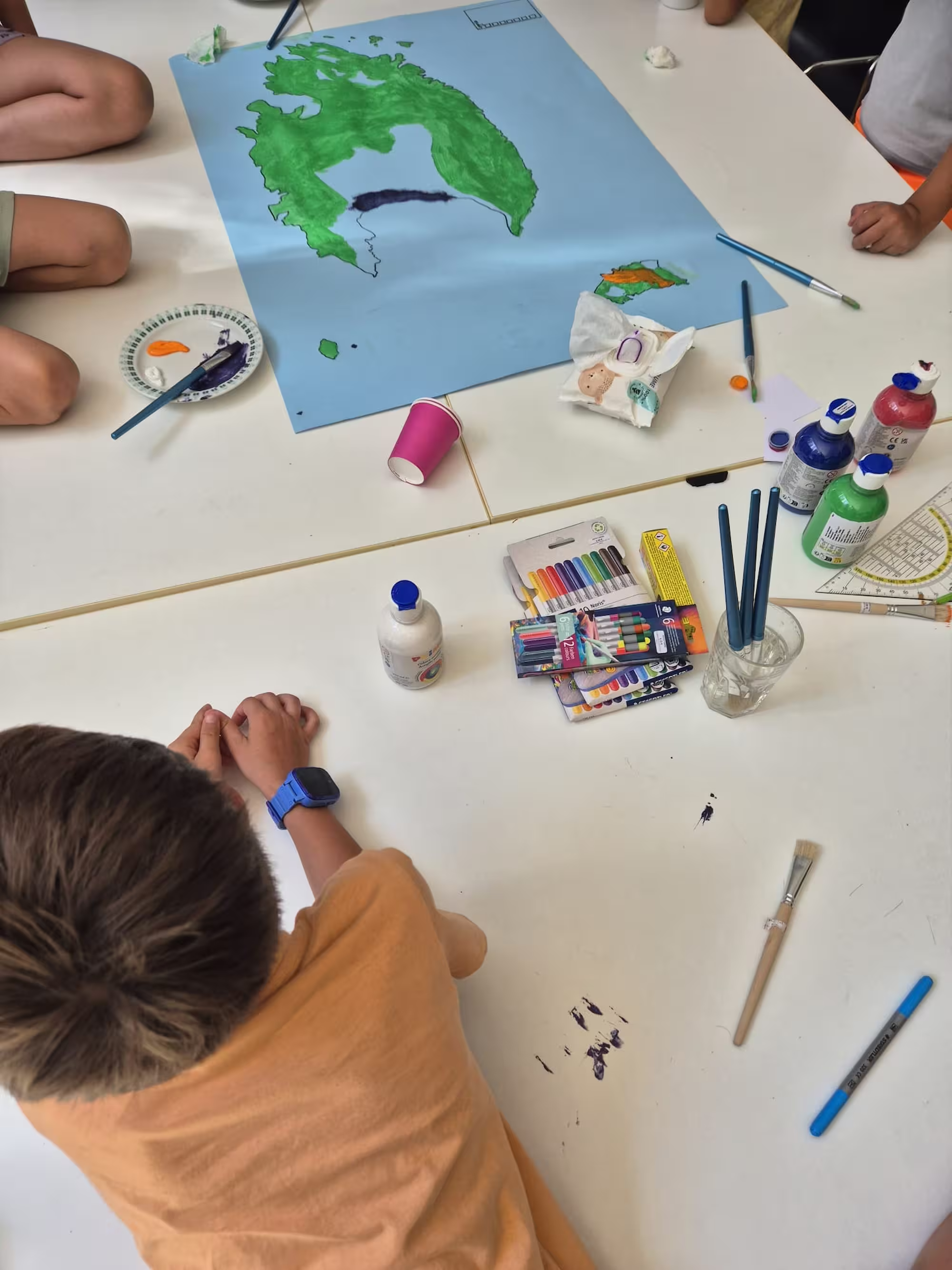
That is why the workshops were designed as a blend of brief introductions, discussions, hands-on work, sample observation, microscopy, drawing, comparing, and independent reasoning.
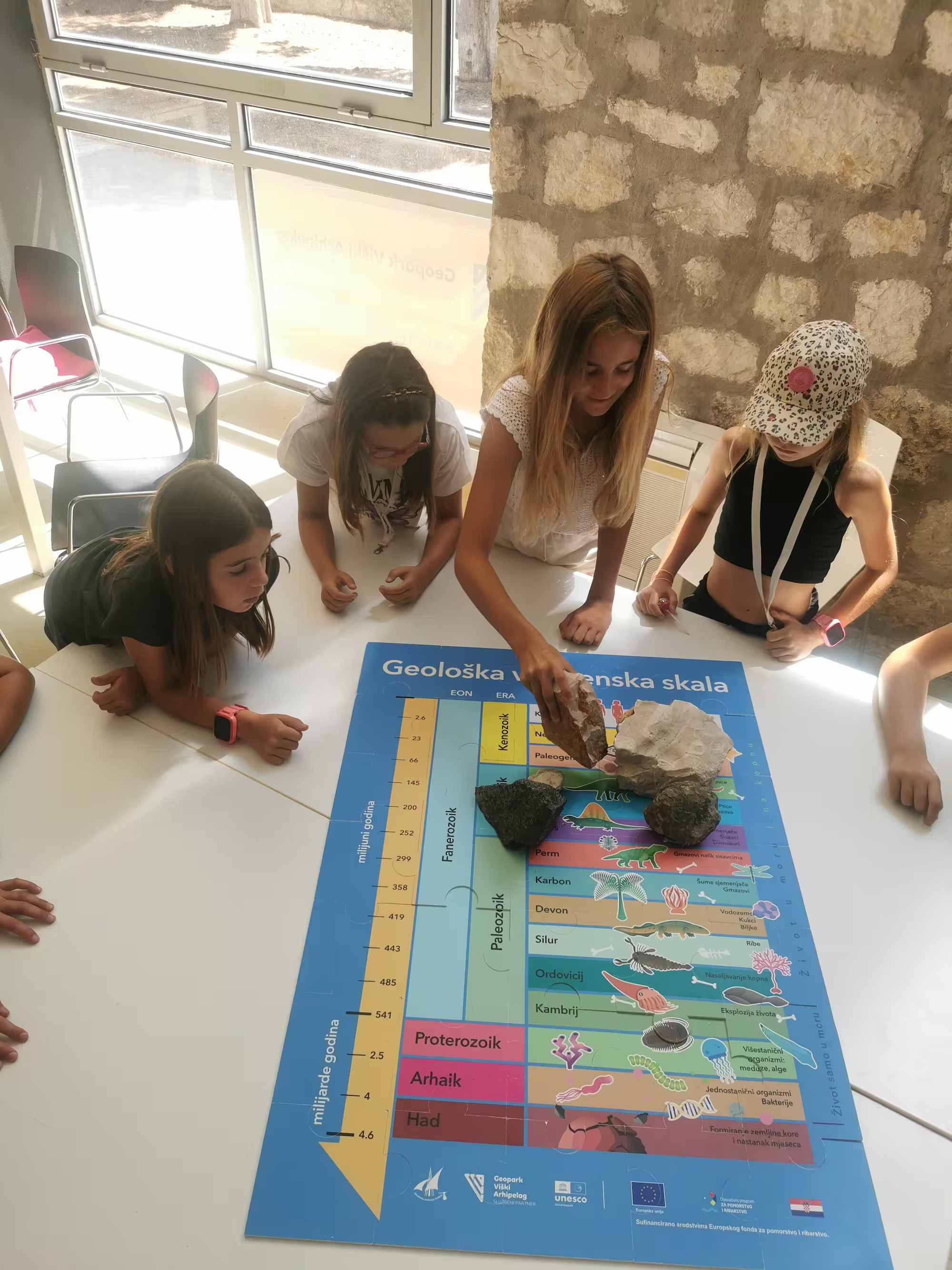
Over the summer, we started with one of the biggest questions: how has the Earth changed throughout its history?
We explored the age of our planet, major geological eras, and the changes that have occurred on Earth over millions of years. The children learned that continents, seas, climate, and life are constantly changing and that we can learn about this distant past today by studying rocks and fossils.
Volcanoes, magma, and the unique geology of our archipelago
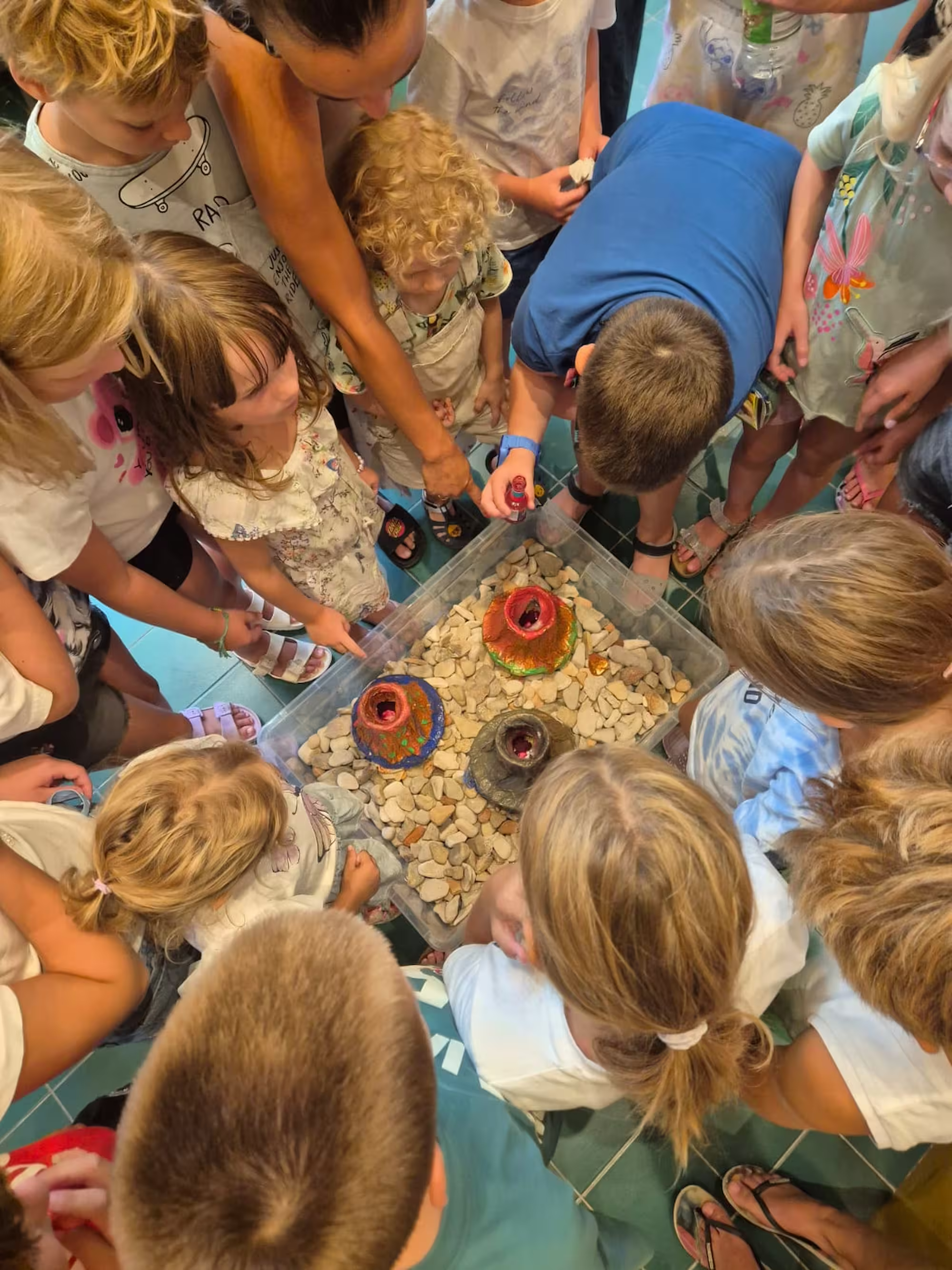
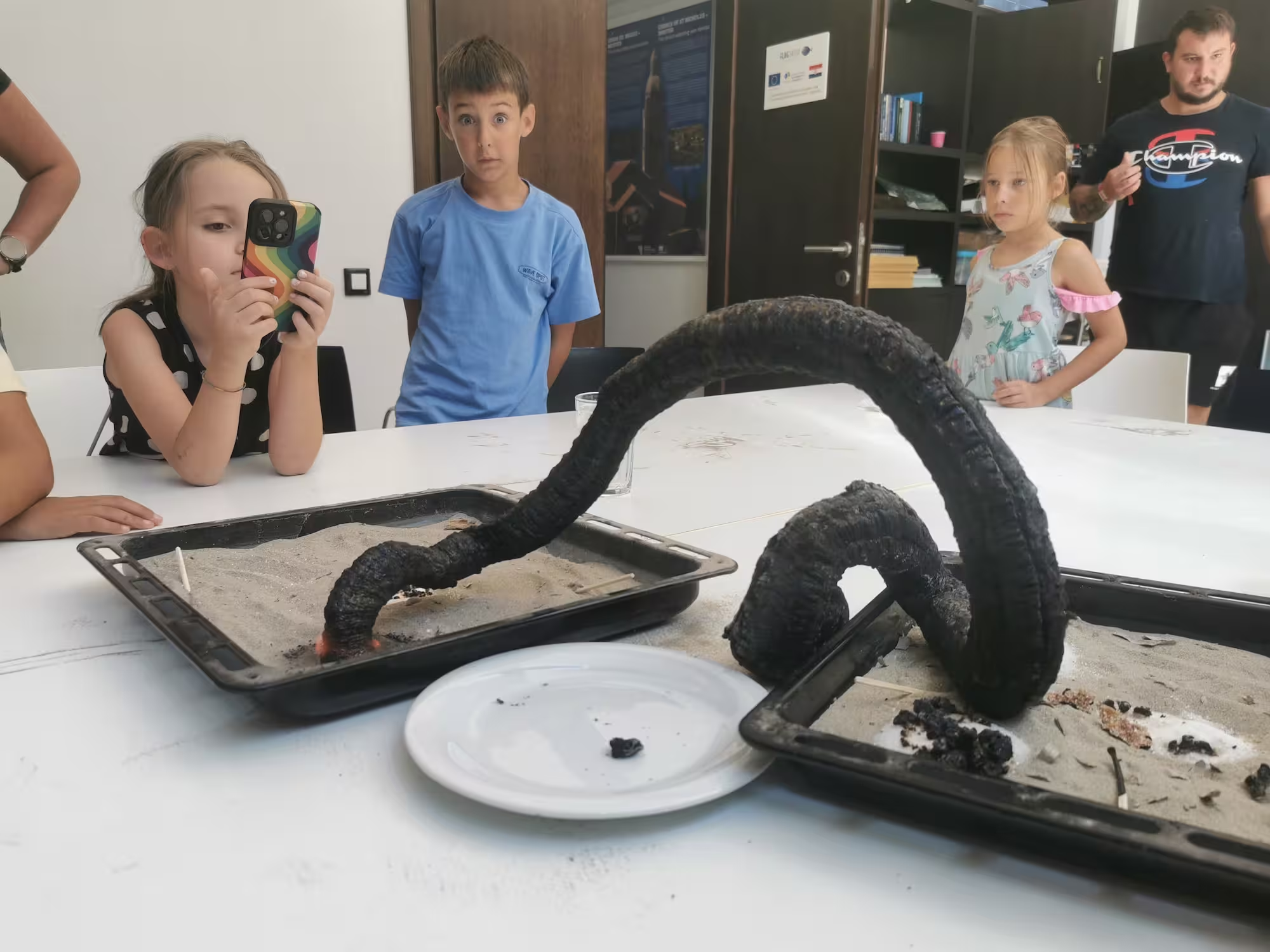
One topic that sparked particular interest was volcanoes.
We learned how they form, what lies beneath their surface, the difference between magma and lava, and what volcanic rocks can reveal about the processes that once took place deep within the Earth.
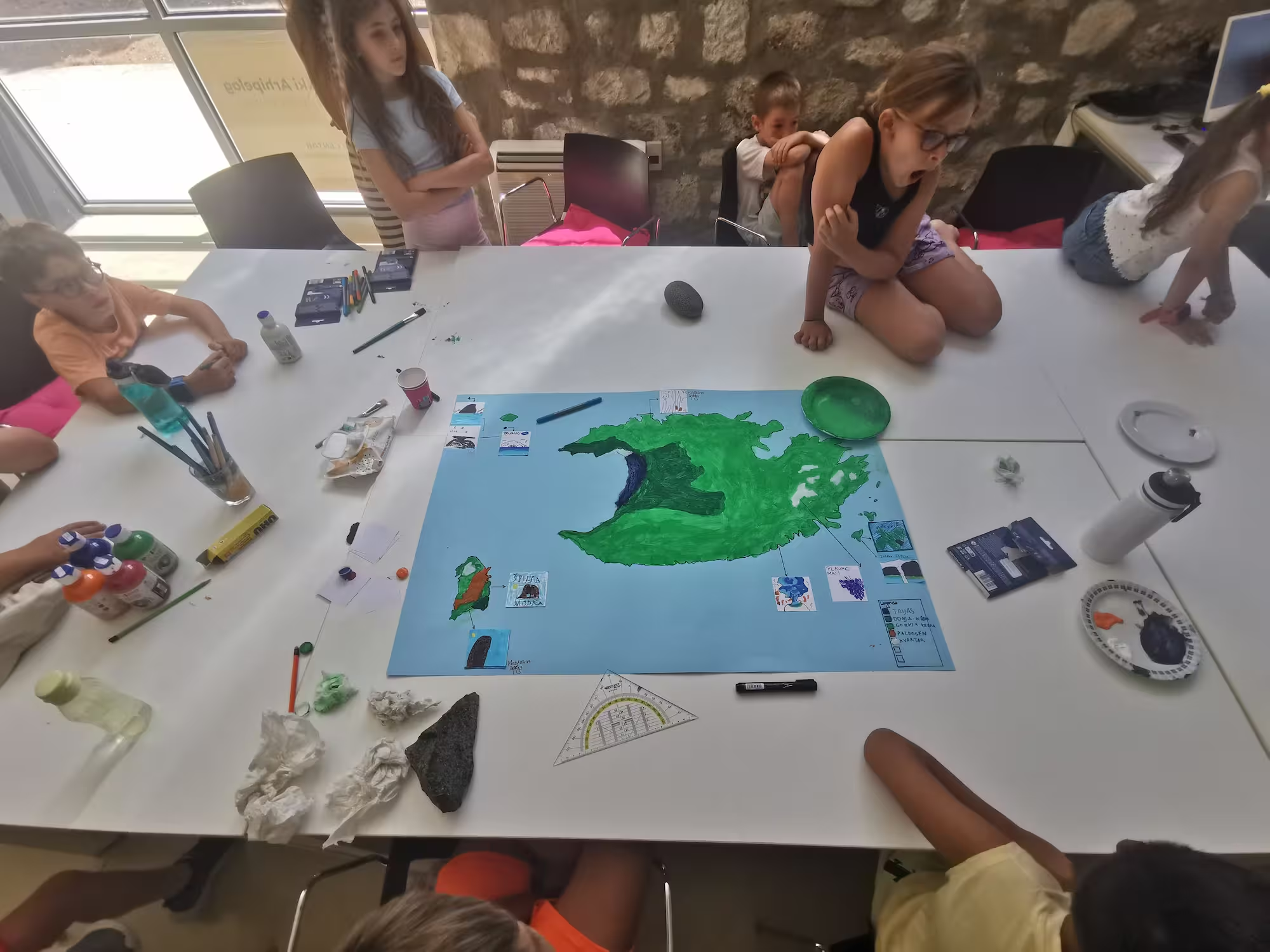
For the children of Vis, this wasn't just a story about distant volcanoes seen in documentaries. The Vis archipelago has its own traces of magmatic activity, which allowed the stories about Brusnik, Jabuka, and their unusual rocks to be connected to a landscape we all know well.
The volcano topic was also one of two Mini Science Day workshops we held in the town of Vis during August.
Geology of the Vis Archipelago – what does the landscape around us tell us?
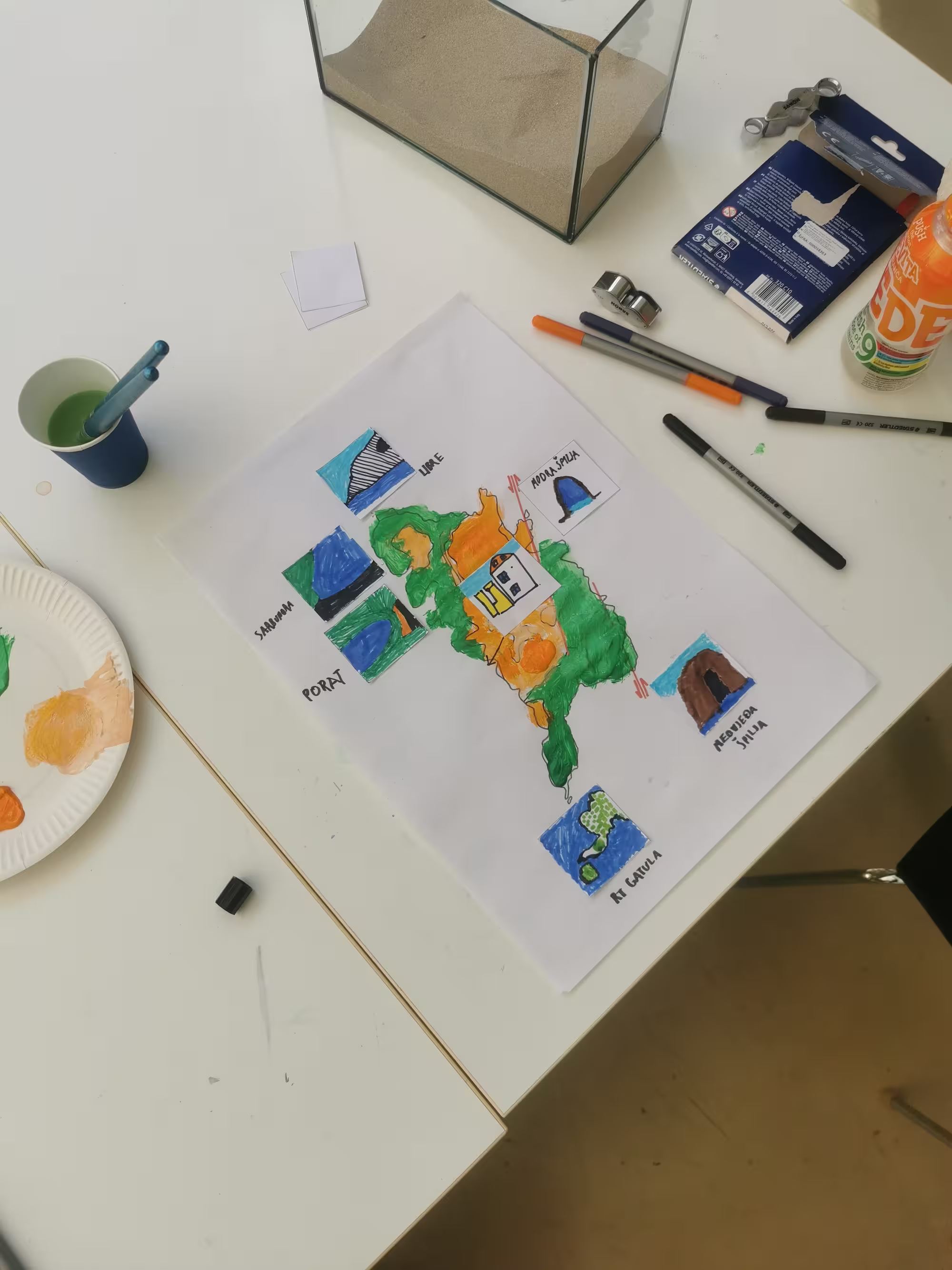
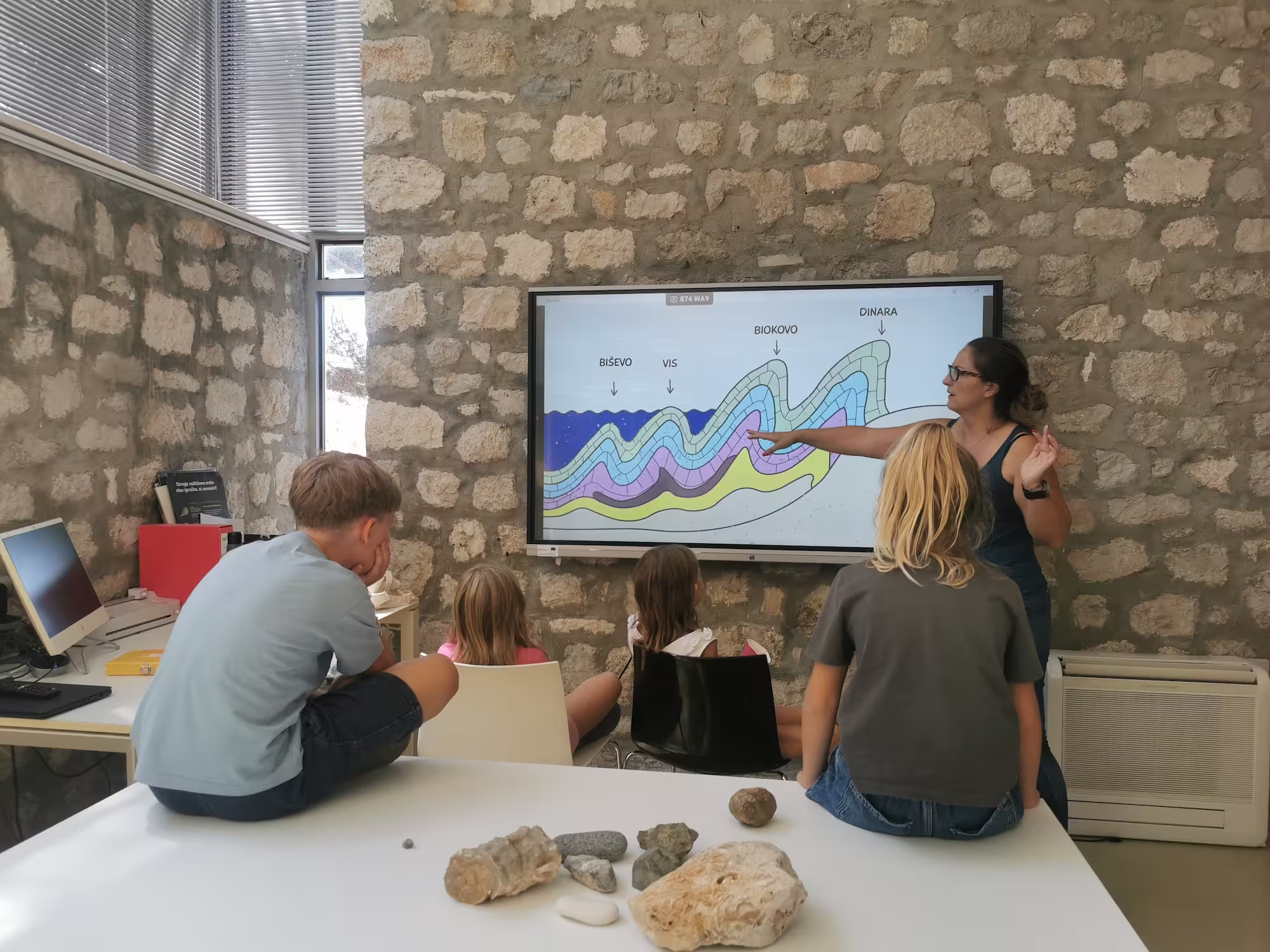
A large part of the workshops was dedicated specifically to the geology of the Vis archipelago and its geological sites.
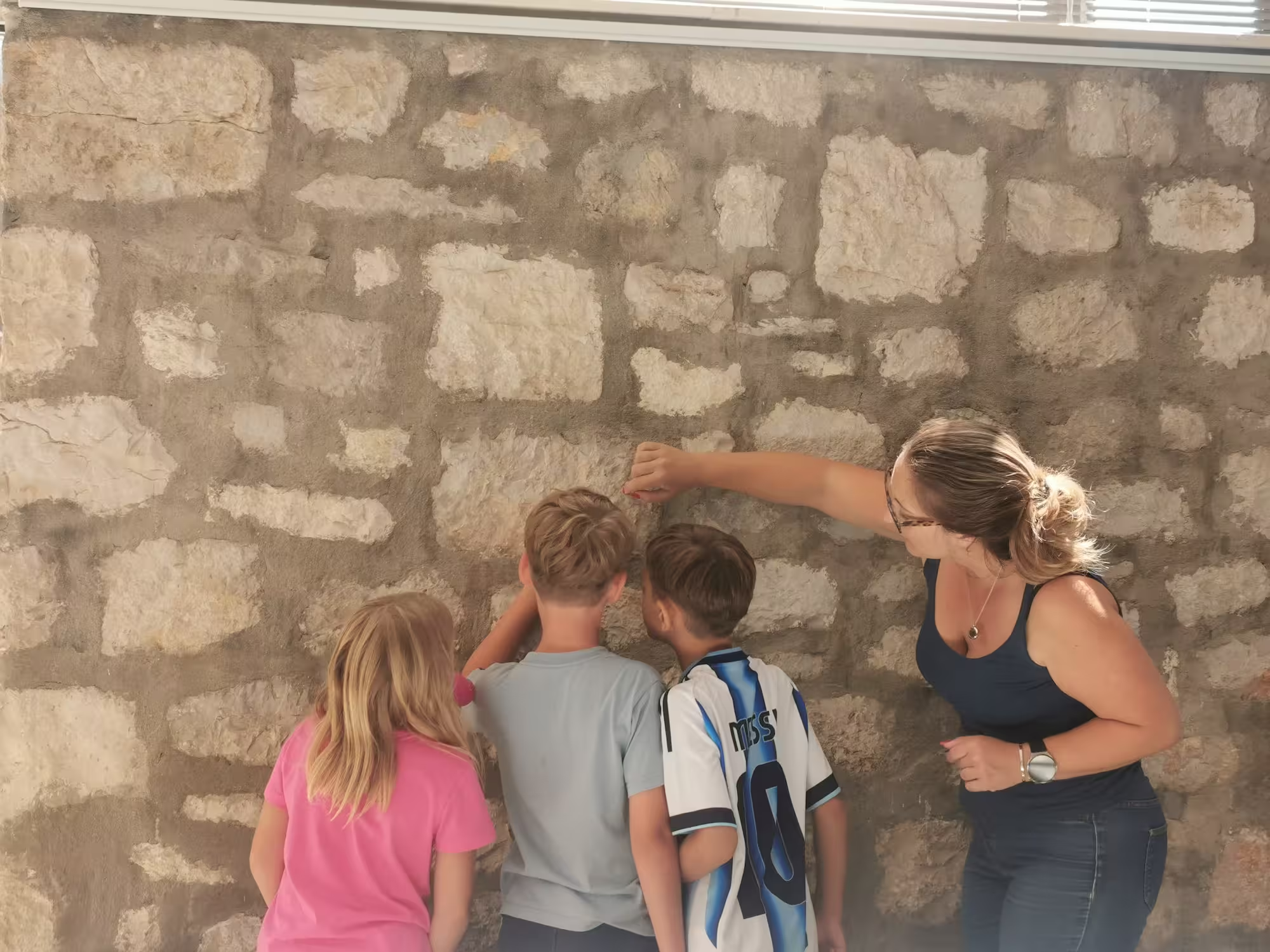
We learned how to distinguish between basic rock types, how they form, and why rocks in different parts of our archipelago are not the same. We discussed what makes a site geologically significant and why it is important to know, explore, and protect them.
The children were introduced to specific geological sites on Vis and the surrounding islands, using maps to connect what we were discussing to the actual area where they live.
Biševo represents a special story, which we focused on throughout the summer through both children's activities and a lecture for an adult audience.
Although small, this island hides a very interesting geological past. Its rocks, karst formations, caves, and current coastline are the result of processes that have lasted for millions of years. Observing such sites makes it clear that geology is not something abstract and distant – it is all around us.
Rocks under the microscope
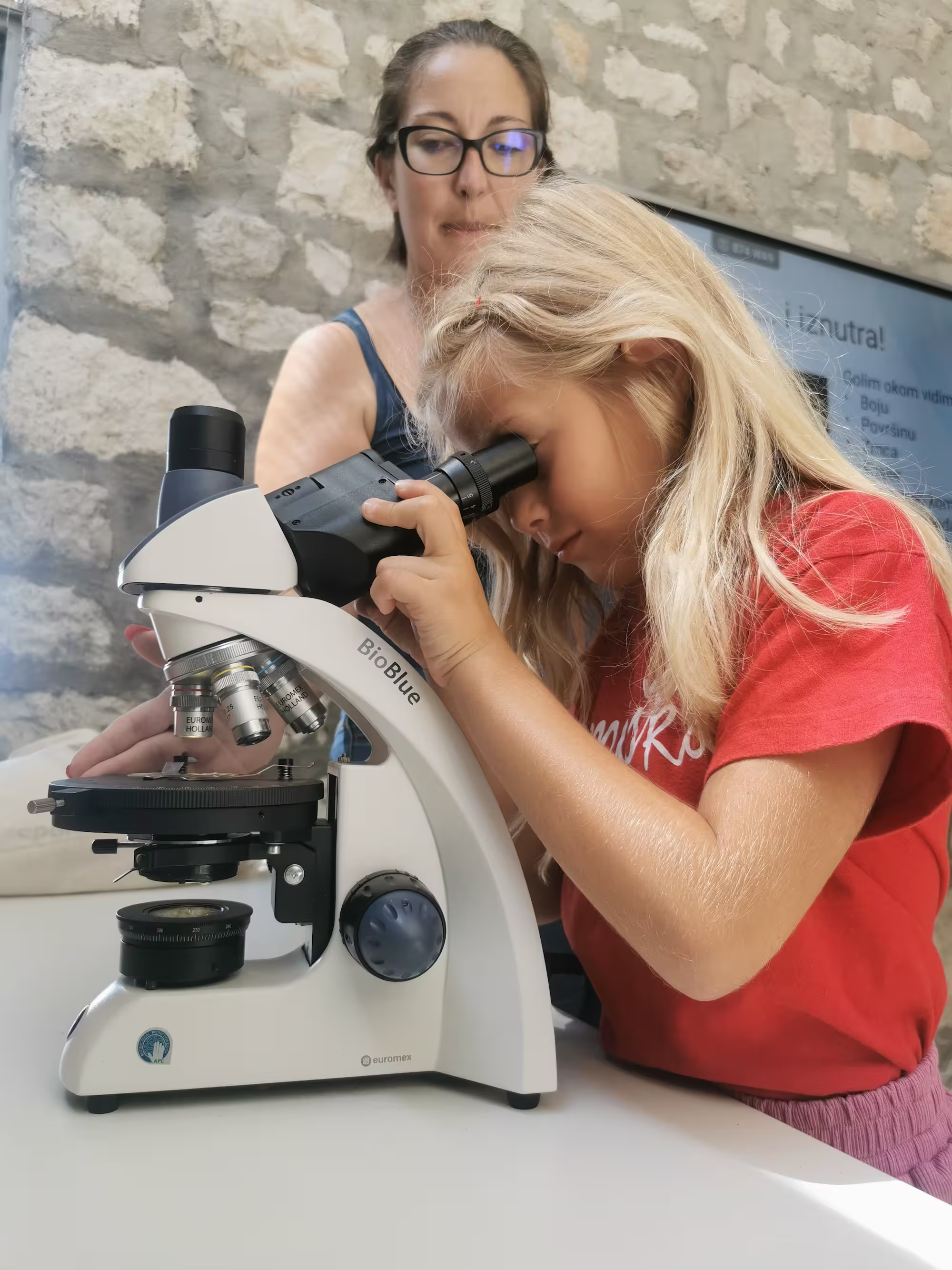
One of the most attractive parts of the workshops was working with a petrographic microscope.
A rock that may look almost uniform from the outside reveals a completely different world of minerals, structures, and colors when viewed in a very thin section under a microscope.
The children compared different samples, observed rocks associated with the geological uniqueness of our archipelago, and were introduced to prehnite, a mineral that tells us about the specific conditions the rocks underwent during their geological history.
In this way, they were able to see what a geologist's work actually looks like – from a rock sample to drawing conclusions about processes that occurred many millions of years ago.
Fossils and rudists – inhabitants of a sea that no longer exists
Fossils were an essential topic on our journey through Earth's past.
The children learned how fossils are formed, what can be preserved in rock, and why fossils are one of the most important sources of information about life in the distant past.
We searched for them in rock samples and discussed how geologists can use fossils to determine what kind of environment once existed in a particular area.
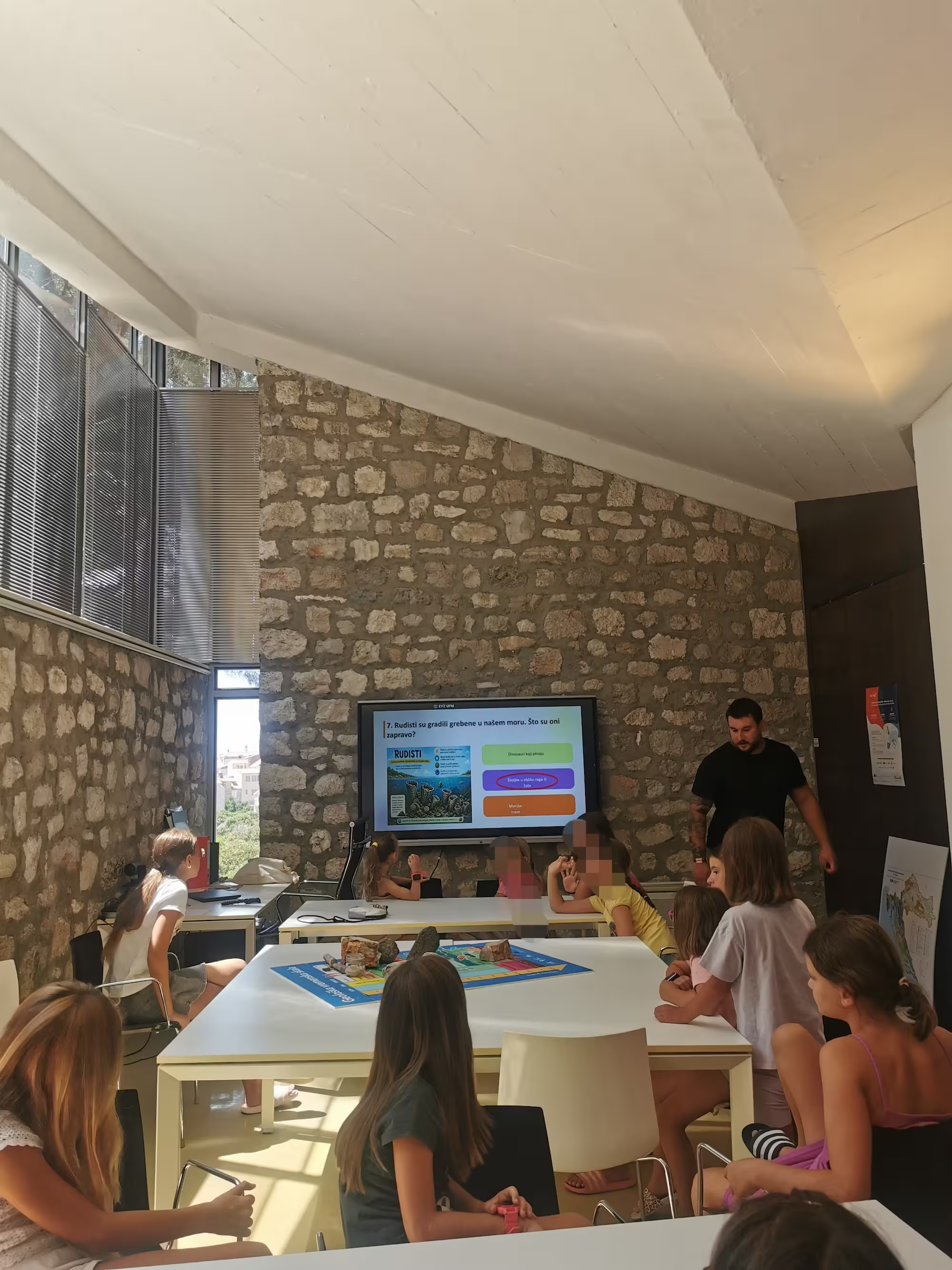
We specifically learned about rudists – an extinct group of bivalves that once lived in warm, shallow seas. Their fossilized remains can be found in limestone, and today they bear witness to a completely different world that existed in this region tens of millions of years ago.
In the places where we walk on stone and look at the Mediterranean landscape today, there was once a sea inhabited by organisms that no longer exist.
From geological past to today's sea
Mini Science Day didn't just stay in the world of rocks.
Part of the workshops was dedicated to the marine ecosystem. Under the microscope, we observed a drop of seawater and discovered life that we generally cannot see with the naked eye.
We learned about phytoplankton and zooplankton, mapped out food relationships among marine organisms, and tried to answer the question of who eats whom – and what would happen if one link in that system disappeared.
One of the key conclusions was that the smallest organisms can play one of the biggest roles. Plankton is at the very foundation of marine food webs, so without it, the marine world as we know it could not function.
Fish – what can we learn from scales and otoliths?
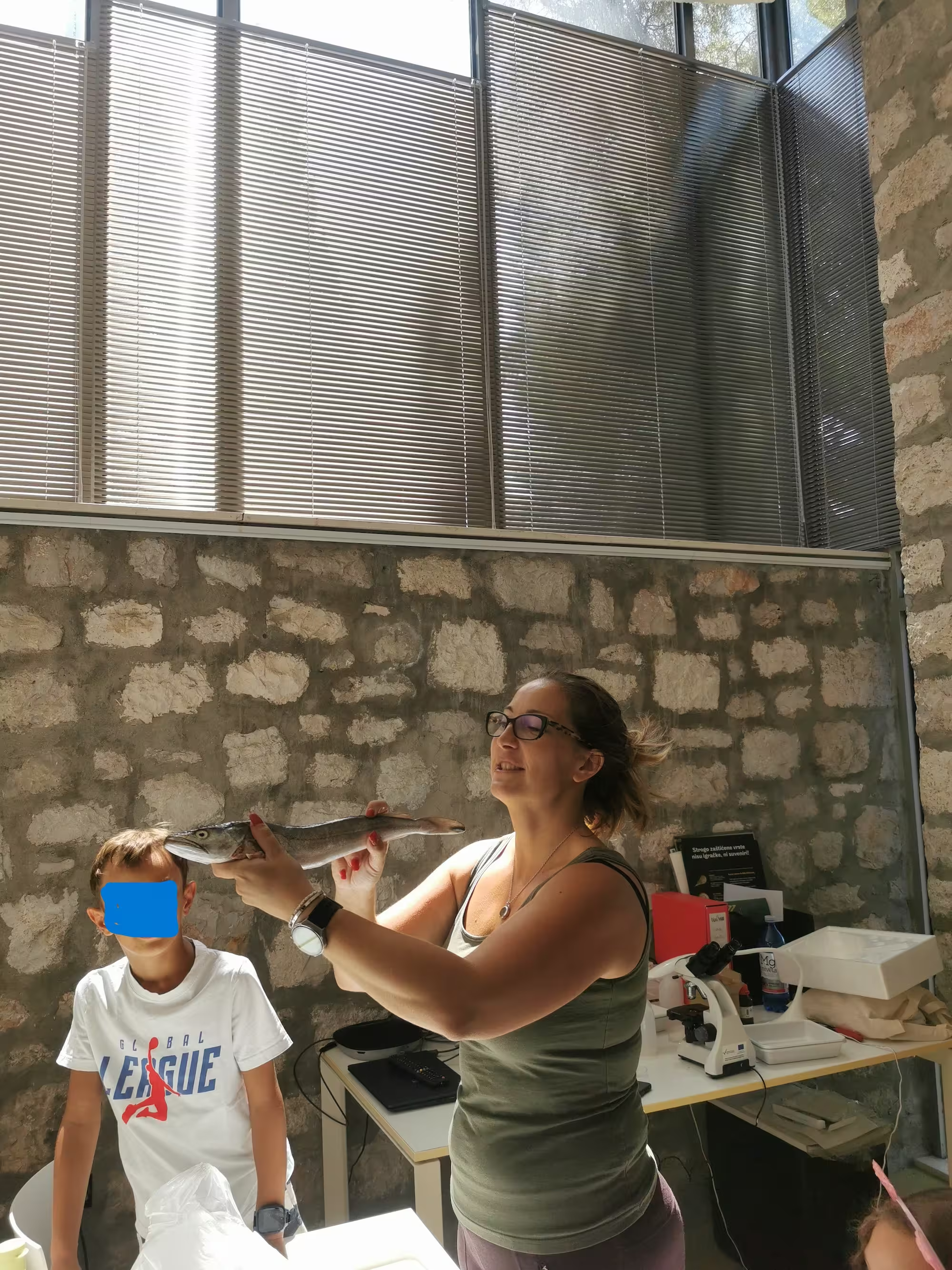
At the workshop dedicated to fish, we took it a step further.
The children learned about the external and internal anatomy of fish, observed their organs, and discovered through hands-on work how a fish's body is adapted to life in water; we also performed a dissection.
We observed fish scales and their growth rings under a microscope, and we also learned about otoliths – small structures in the inner ear of a fish that play an important role in balance and orientation and are also used to determine the age of fish.
Snakes of the Vis Archipelago
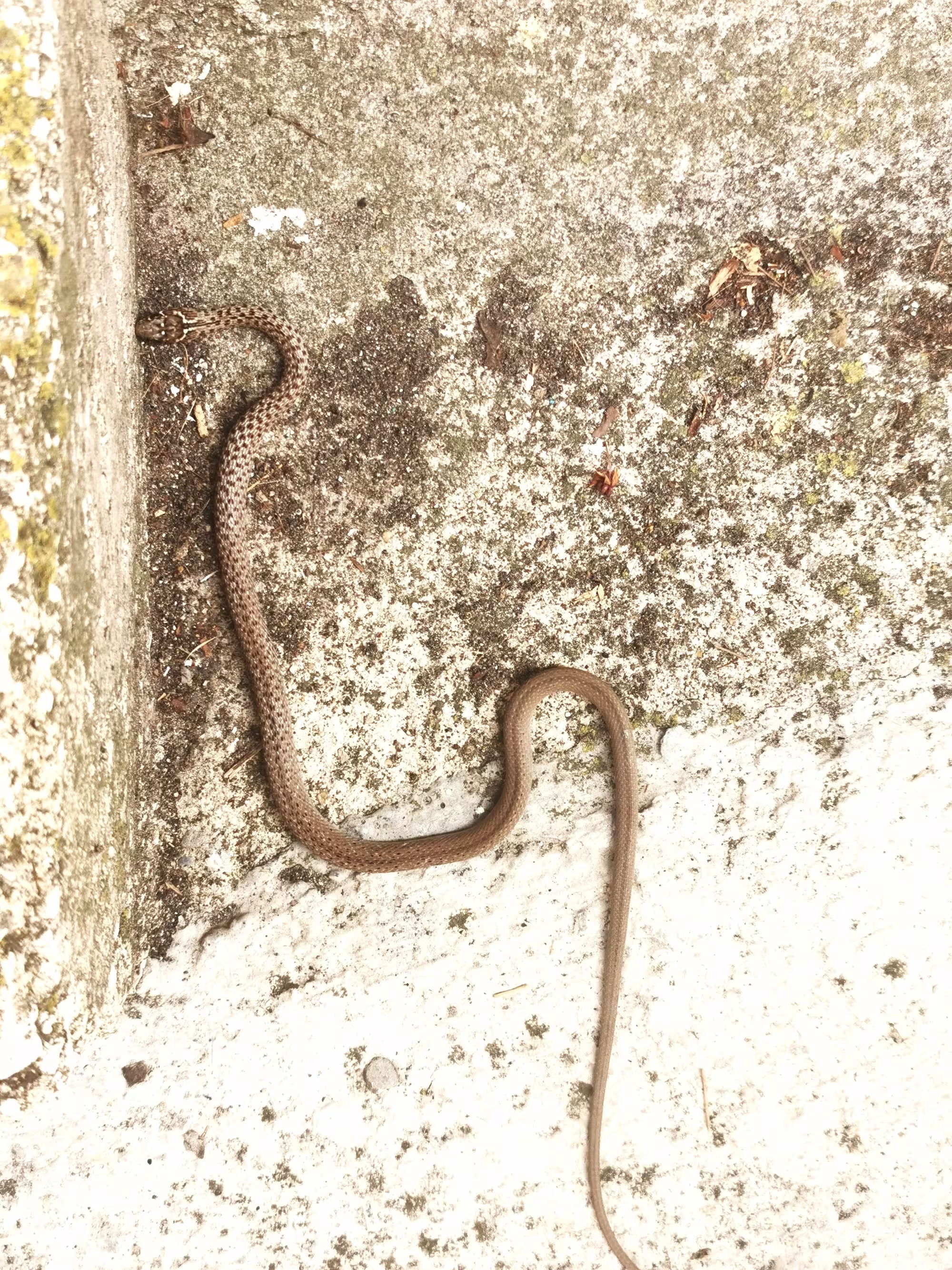
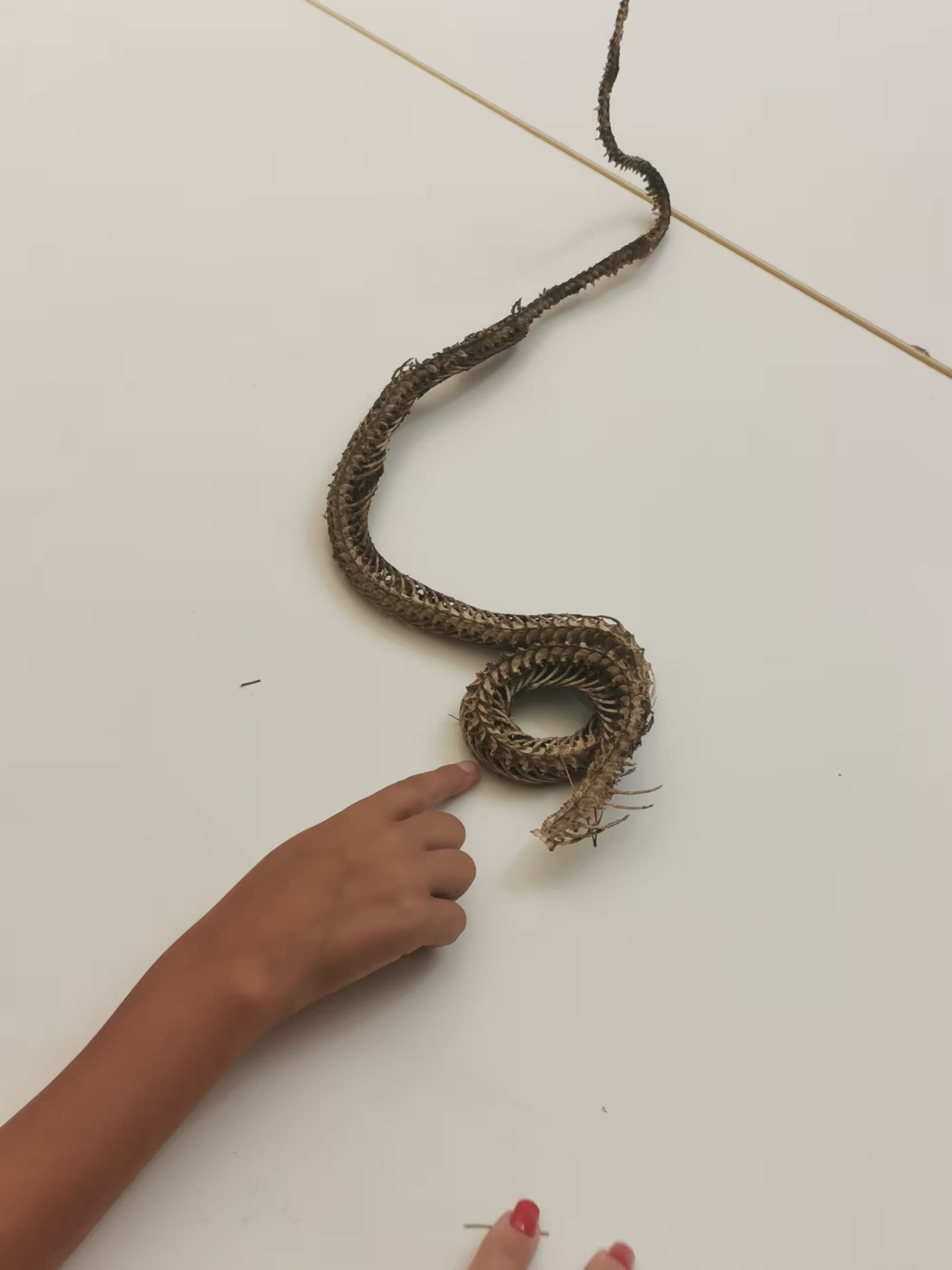
We concluded our summer cycle of children's workshops with a topic that always sparks many questions – the snakes of the Vis Archipelago.
We learned how snakes evolved, what their bodies look like, how they move, what they eat, and which species we can encounter in our archipelago.
It was equally important to discuss their role in nature and how to behave properly and responsibly when we encounter a snake in its natural habitat.
The snake workshop was also held in the town of Vis and was the second of two Mini Science Day workshops there in August.
Seven lectures – geology for all generations
While Wednesdays in Komiža were primarily reserved for our young scientists, we also brought geological topics closer to an adult audience—local residents and island visitors alike—through a series of seven summer lectures.
The lectures were held in Komiža and Vis, covering the most significant features of the Geopark: the oldest rocks in the Adriatic, the geological development of the Vis archipelago, the geology of Biševo, valuable geological sites and protected natural areas, and one of the most intriguing questions about life on an open-sea island—how Vis has its own drinking water.
Through various topics, we aimed to show the audience that today's landscape did not appear overnight. It was shaped by processes spanning hundreds of millions of years, with their traces found in the rocks, relief, caves, springs, fossils, and the coastline we know today.
One summer, millions of years of history
This year's program connected nine Mini Science Day workshops in Komiža, two additional workshops in Vis, and seven lectures in both towns.
Beyond these numbers, however, what we explored together is what matters most.
From the formation of the Earth, geological eras, volcanoes, and fossils, to the geology of Vis and Biševo, rudists, and rocks under a microscope, all the way to plankton, fish, and snakes—every topic was part of the same grand story of the Vis archipelago.
This is precisely one of the key roles of a UNESCO Global Geopark: to make scientific knowledge accessible and to show that geology, nature, and life are not separate stories. The geological past has shaped today's relief, water, soil, sea, and ecosystems, and we can find its traces at almost every turn.
We are especially pleased that our youngest participants had the opportunity throughout the summer to experience science firsthand—looking through microscopes, studying rocks, searching for fossils, piecing together geological history, exploring the marine world, and asking new questions.
We would like to thank everyone who participated in our workshops and lectures throughout the summer, as well as the organizers of the Summer in Komiža, Mini Summer in Komiža, and Vis Summer 2026 programs.
Summer is coming to an end, but the stories of the Vis archipelago remain all around us—written in the rocks, fossils, sea, and the landscape we see every day.
.avif)
.avif)
.avif)
.avif)
.avif)
.avif)
.avif)
.avif)
.avif)


Posljednje novosti

Hrvatskih mučenika 17
21485 Komiža, Croatia
+385 91 271 30 23
geopark@geopark-vis.com
Fotografije: Ivo Pervan, Matko Petrić, Stjepan Mekinić
Design & development: P3R0